Bulgaria is the foreign country where I’ve spent the most time. I’m there for a few months every summer as a digital nomad. So it’s obviously one of my favorite countries in Europe; it’s very beautiful and also very affordable. Since January 1st, the country adopted the euro (€) and uses this popular currency, but fortunately, the impact shouldn’t be too significant for travelers.
Last year, I told you about the fact that Bulgaria (and neighboring Romania) joined the Schengen Area on January 1st, 2025.
This year, it continues with entry into the eurozone (without Romania). It’s the 21st country to join the eurozone and the 27th to adopt the euro as a currency.
Here are the details about Bulgaria now using the euro.
Why is Bulgaria now using the euro?
Bulgaria officially adopted the euro to better integrate into the European Union (EU). The country is the poorest in the EU, which is obviously a shame for citizens (but objectively very good for us as travelers). Their hope is that joining the eurozone will foster their economic growth.
To recap the basics:
- Europe is a continent
- It’s a geographic term
- The European Union (EU) is a political union
- Between several countries in Europe (but not all)
- The eurozone is a monetary union
- Between several EU countries (and a few others de facto)
- The Schengen Area is a territory without borders
- This includes EU countries and a few non-EU countries
You can read our detailed post about the difference between all these European concepts.
Many people believe that the euro is used as a currency everywhere on the continent, but that’s absolutely not the case. Even in the European Union, not all countries use the euro.
But the Bulgarian government decided to join the eurozone to better integrate with the majority of countries on the continent. It’s controversial, and polls show Bulgarians are very divided on the topic.
It’s especially controversial given that their government fell again in December. They’ve had 7 parliamentary elections over the past 4 years and risk facing yet another one soon.
What’s the impact of using the euro in Bulgaria for travelers?
It shouldn’t change many things. The 2 aspects are the cost of living and the practical side (I’ll ignore the fear of erasure of national identity expressed by many Bulgarians, because it’s not really relevant for travelers).
- Cost of living: Minimal impact
- The Bulgarian lev value was already pegged to the euro
- The positive impact on their economy won’t be immediate
- Practical side: Minimal impact
- You should pay for everything you can by credit card
- For cash, it’s more useful to have euros than leva
Let’s briefly look at each of the impacts.
Value pegged to the euro
The former Bulgarian currency, the lev (plural: leva), had a value pegged to that of the euro (and to the Deutsche Mark before that).
So there won’t be a shock like those we’ve seen in other countries. The only concern is about the fact that 1 euro was worth 1.95583 lev, and many feared that everything would be rounded up, but the government says it’s monitoring this (and otherwise, that’s still just 2.2%).
Impact on the economy
The fact that Bulgaria is the poorest country in the EU obviously explains why the cost of traveling there is low for us. It’s not a perfect correlation, but as a general rule, the richer a country is, the more expensive it is to travel there.
The growth of the Bulgarian economy will continue (and maybe speed up), but the adoption of the euro shouldn’t have a major immediate impact on its level of wealth. It’s not something instantaneous.
Credit cards
As a savvy traveler, you should pay for everything with a credit card that gives you a big welcome bonus. Or, at the very least, with a card without foreign transaction fees to earn some rewards, instead of losing money on every purchase (like so many travelers who don’t know about foreign transaction fees do).
So whether it’s in euros or in leva doesn’t change anything logistically for most purchases. You still need to continue avoiding the terrible scam that is dynamic currency conversion (DCC).
More useful for cash
The fact remains that many places still only accept cash in Bulgaria, so you need some. It’s the most positive impact of adopting the euro, because it’s really more practical as a liquid currency for us travelers.
Don’t forget to avoid 3 very common errors, which are withdrawing money in Canada, at a non-bank ATM, or with a card that has foreign transaction fees (like all Canadian debit cards). You should always withdraw at a bank ATM, once you’re in the country, with an EQ Bank Prepaid Card (it’s free and has no impact on your credit score because it’s not a credit card).
(Payments while traveling are one of our upcoming tips posts soon to start off 2026 the right way!)
Why visit Bulgaria?
Bulgaria is in Eastern Europe, the best of the different regions of Europe. More specifically, in the magnificent Balkans region. The country has a lovely coastline on the Black Sea and borders Türkiye, Greece, North Macedonia, Serbia, and Romania.
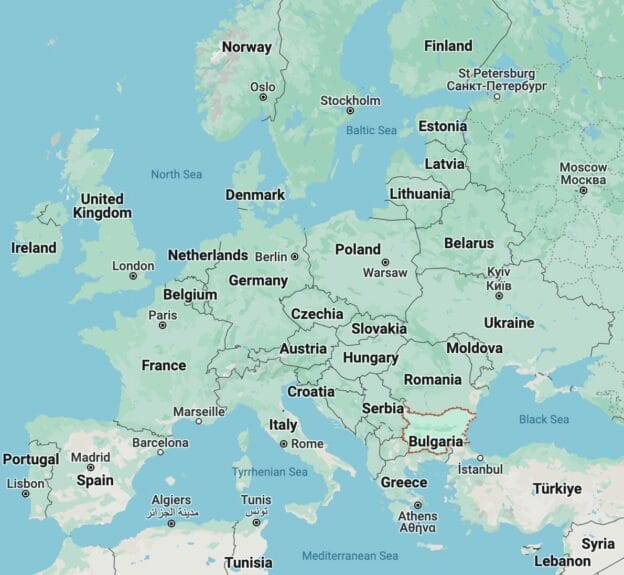
Bulgaria has 6.4 million inhabitants, which is just a bit more than British Columbia (5.7 million). In size, it’s about 2 times that of Nova Scotia.
Bulgaria is an underrated and highly affordable destination that should not be missed. It’s authentic and not yet (too) touristy, at least for European standards. I recommend going before it becomes too touristy!
You’ll find sunny beaches along the Black Sea, the 2000+ year-old capital Sofia, a few historic cities like Plovdiv, and the famous Balkan Mountains (that’s the specific spot where I spent the most time in Europe).

This small nation has superb attractions, both cultural and natural. By the way, Bulgaria is charmingly nicknamed the “Land of Roses” because of its mass production of the flowers of love.
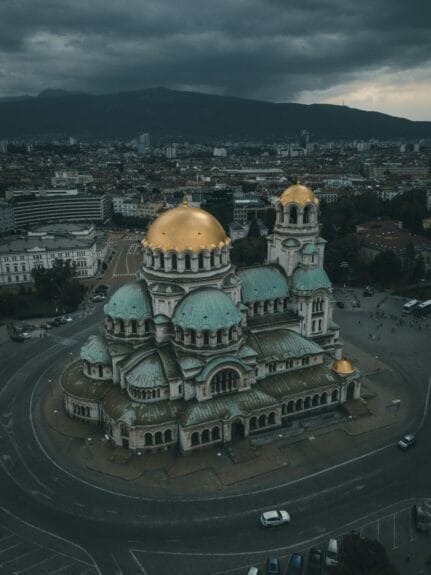
Sofia is a surprising city I love to go back to.
The country’s largest city boasts many interesting historical monuments, pretty Orthodox churches, old Soviet buildings, and lots of trendy boutiques. Above all, you absolutely must try out some of the local restaurants. I promise you’ll love it!
It will likely be your gateway to the country thanks to cheap flights. With the self-transfer tip, the best trick for flights to Europe, you can take advantage of flights as low as 27 CAD one-way between Sofia and London, for example.
There are also dozens of cheap cities to choose from based on the one that is the cheapest from Canada for your dates. You are definitely overpaying if you are buying flights between Canada and Bulgaria on a single plane ticket, as is the case for almost all European destinations.
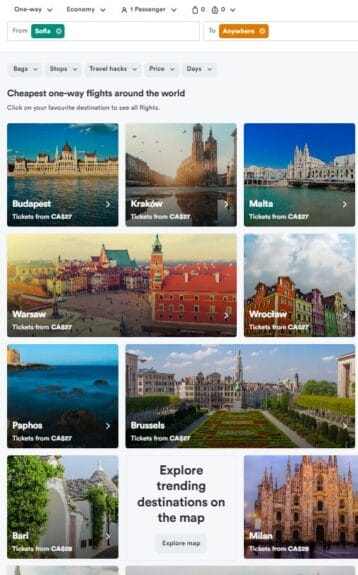
With Flytrippers’ other co-founder, Andrew, we once also took the very cool train between Sofia and İstanbul. That will rarely be a cheaper way to get to Bulgaria, but it’s an excellent way to combine Bulgaria and another of our favorite countries, incredible Türkiye. Bucharest and Skopje are 2 other cities we enjoyed in neighboring countries that are good to combine with Bulgaria.
As for my favorite, it’s Bansko. It’s the small Bulgarian mountain town where my girlfriend and I love to spend our summers.
It’s a nice chill town with superb hiking. There are great restaurants and excellent wine. It’s a very nice place that offers the best of this marvelous continent, without all the tourists and the high prices they bring!
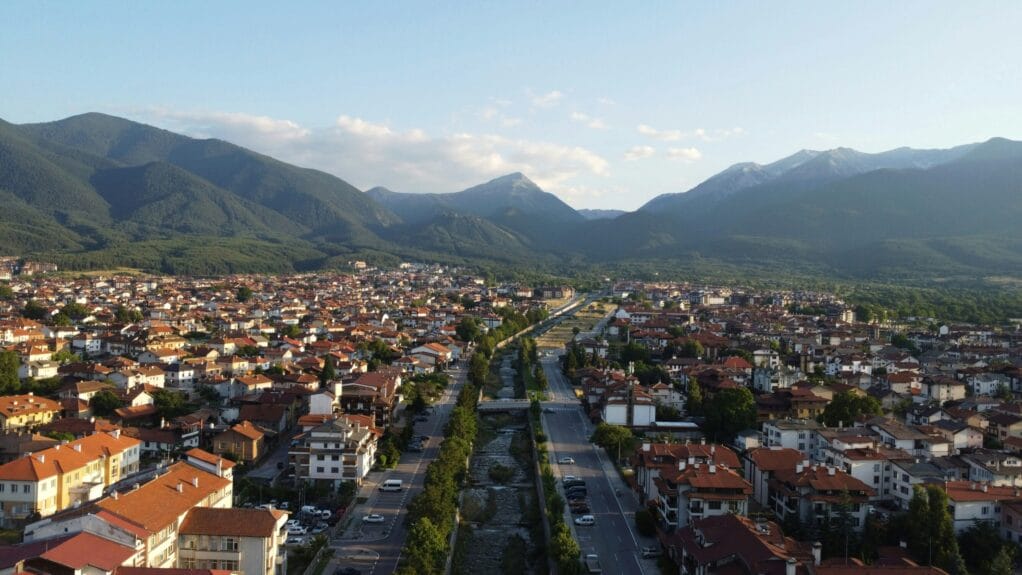
And most importantly, at least for us, there’s a vibrant community of digital nomads. It’s where Bansko Nomad Fest, the world’s biggest such gathering, takes place. Even after it’s over, it’s difficult to walk anywhere without running into people we know.
What is the cost of accommodations in Bulgaria?
In 2026, we’ll work hard to have more content to help you, like a revival of our feature with accommodation price examples around the world.
While you await the post about Bulgaria, here’s a teaser.
I’m going back to Bansko again for 2 months in the summer of 2026, and I booked the same luxury apartment as last year. It once again cost me only 400 EUR per month, which is 7 EUR per person per night.
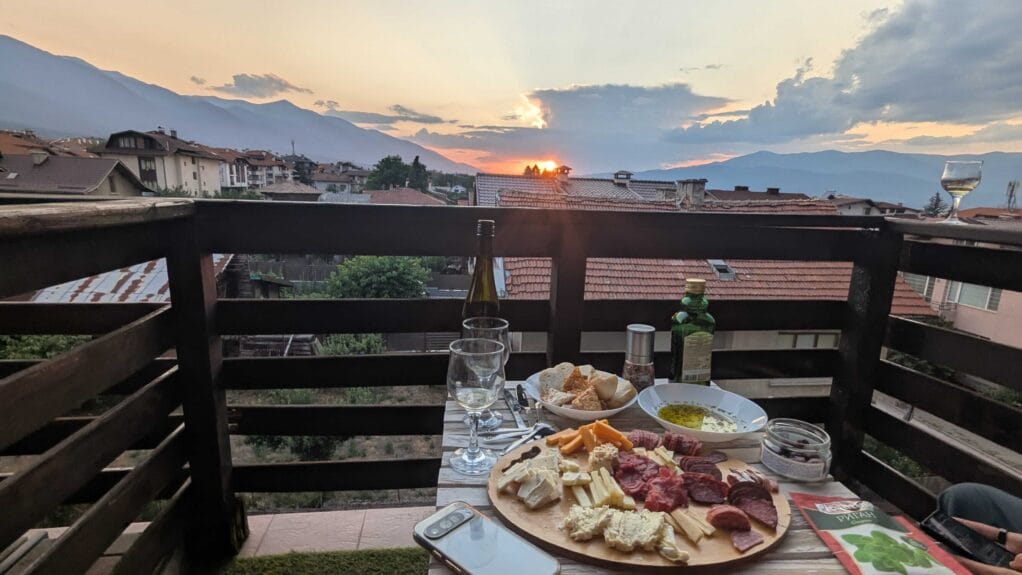
That is what affordable means in Europe. Too many people who consider Portugal “affordable” should really go discover the East; you won’t regret it (and your travel budget won’t either)!
Here are some examples of accommodation in Sofia:
- Nice hostel: Hostel Mostel
- $15 per night per person
- Rated 8.7/10
- Nice hotel: Generaator Sofia
- $51 per night
- $26 per night per person with a companion
- Rated 9.0/10
Here are some examples of accommodation in Varna, on the coast:
- Nice hostel: M Hostel Musala
- $21 per night per person
- Rated 8.1/10
- Nice hotel: Villa Savovi
- $47 per night
- $24 per night per person with a companion
- Rated 8.8/10
Bulgaria is an excellent example of one of the most important things to understand about points of the more lucrative type: sometimes they’re phenomenal (70,000 Marriott points for a night worth $3000+), and sometimes they’re not so great (Bulgaria).
It VARIES! That’s what makes it possible to get outsized value… if you redeem them well!
Marriott points are amazing to maximize the quantity of free nights you get or to maximize the value you get. Including in many European countries. But it’s not the case in Bulgaria, even if it’s an affordable country. That’s how it is.
There are only 4 Marriott options in Bulgaria, which is the main problem. The limited supply means that point redemptions are less attractive. At certain times of the year, the Four Points by Sheraton Bansko in the mountains is 22,400 points per night (112,000 for 5 nights), but it’s often even more expensive.
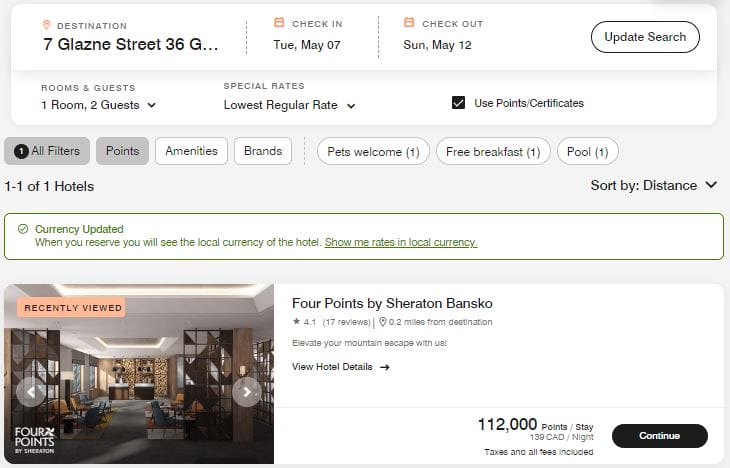
So I wouldn’t waste precious Marriott Bonvoy points there.
But every traveler is different, and even those who don’t want to rack their brains should get the Marriott Bonvoy Amex Card eventually (its increased welcome bonus is usually in the Spring; we’ll let you know so you don’t miss it this year).
Learning how to travel for less
Join over 100,000 savvy Canadian travelers who already receive Flytrippers’ free newsletter so we can help you travel for less (and keep you updated on all things travel)!
Sign up for our free newsletter
Sign up for our newsletter
Summary
Bulgaria now uses the euro. It’s the 27th country to adopt this currency (including the 6 countries that are not part of the eurozone). It’s the foreign country where I’ve spent the most time, and I certainly recommend going before it becomes more touristy.
What would you like to know about Bulgaria’s use of the euro? Tell us in the comments below.
See the flight deals we spot: Cheap flights
Discover free travel with rewards: Travel rewards
Explore awesome destinations: Travel inspiration
Learn pro tricks: Travel tips
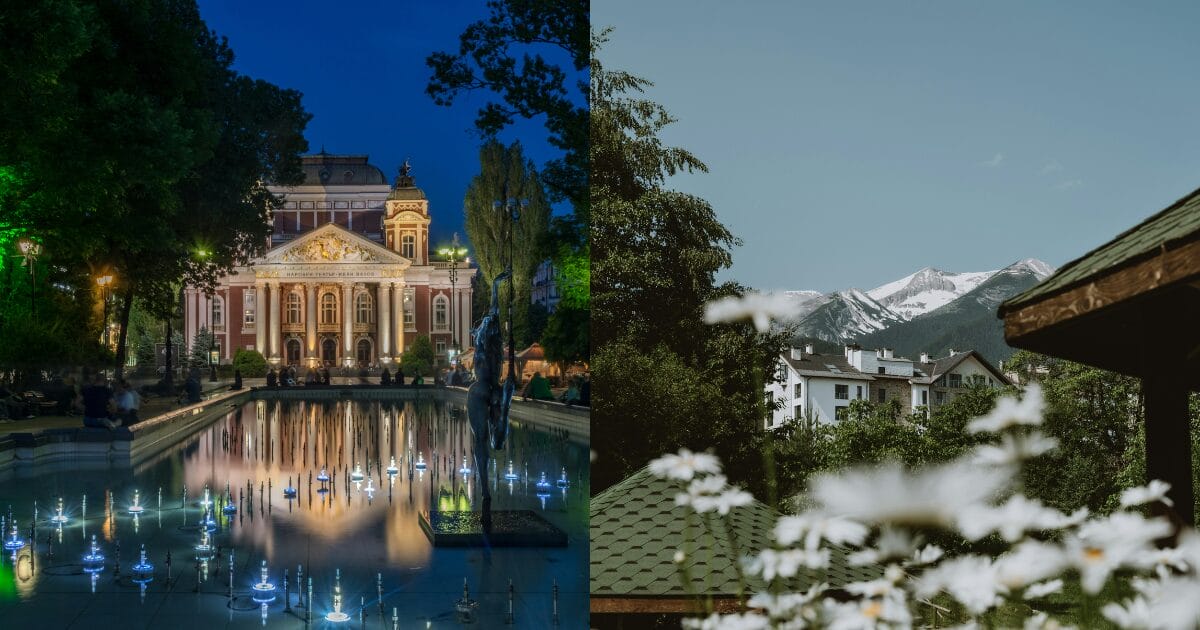
Featured image: Sofia and Bansko, Bulgaria (photo credit: Valeri Terziyski and Virginia Marinova)