
 | Flytrippers cofounder |
Brand-new airports really don’t pop up very often. There hadn’t been any in Canada in a few decades, but yesterday, the Montreal-Metropolitan airport (YHU) officially opened in Saint-Hubert (part of the South Shore city of Longueuil). Short of being able to take off from there, I was at least able to land there. It was very nice: both the airport itself and the airline, Porter (as usual).
One of the best deals in Canada gives you automatic VIPorter elite status: free checked bags, free full-size carry-on bags, free seat selection, priority boarding, etc. And most importantly, it gives you a huge welcome bonus of ≈ $1391 in free flights (redeemable on Air Transat too, not just on Porter).
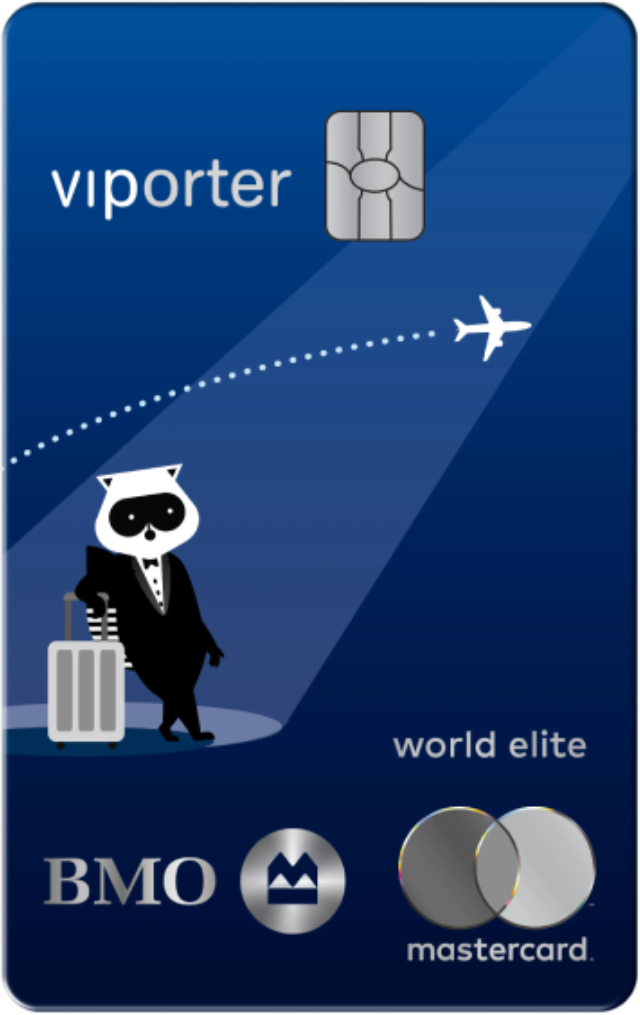
All you need to do is get the excellent BMO VIPorter World Elite Mastercard that we highly recommend. Flytrippers helps you travel for less with our 3 types of content, namely flight deals, travel rewards, and tips/inspiration/news.
Here’s what it was like to land at the new Montreal-Metropolitan airport (YHU)… as well as a teaser of my Porter experience.
What is the Montreal-Metropolitan airport?
If you already know the basics of this new airport, you can skip directly to the sections with my impressions and photos.
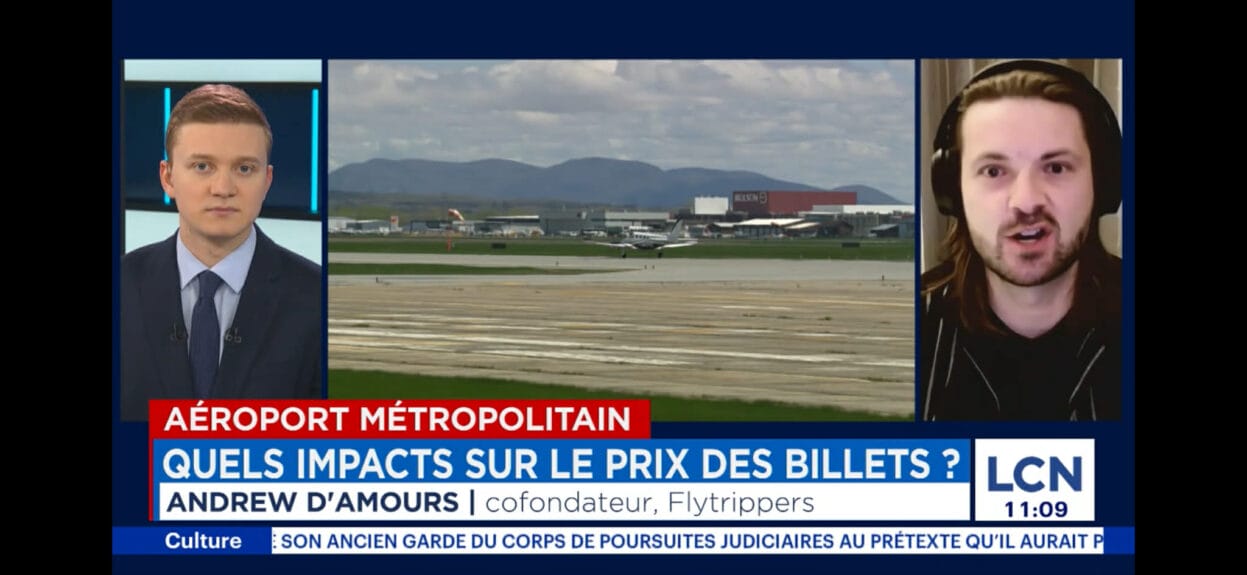
You’ve probably already heard about the Montreal-Metropolitan airport. One of my many TV interviews was even on this topic a few weeks ago; Flytrippers has been telling you about the new YHU for literally years. Well, it’s finally open!
More competition is always a good thing for consumers, in the airport world… as it is for all industries, for those who might not be familiar with basic economics.
The Saint-Hubert airport has existed since 1927, but it was renamed, and a brand-new terminal was just built by Porter (they still operate out of YUL as well, to be clear).
The new terminal at the Montreal-Metropolitan airport was built without public money; bravo. It’s worth pointing this out, given how rare that is in Canada (where government spending now reaches an incredible 43% of our GDP).
The idea is simple: pretty much every major city in the world has 2 airports.
And Montreal really needs one, given the upcoming chaos at the Montreal-Trudeau airport (YUL), which wasn’t designed for such passenger volumes (you probably know the story of the Mirabel fiasco).
Let’s briefly look at the advantages and disadvantages so you understand the essentials of this new airport.
The main advantage of the Montreal-Metropolitan airport is that it’s small, efficient, and fast. A completely different world; the experience is supposed to be smoother and more relaxed, unlike a big major airport. And airfares are often cheaper right now, because they need to build a new customer base.
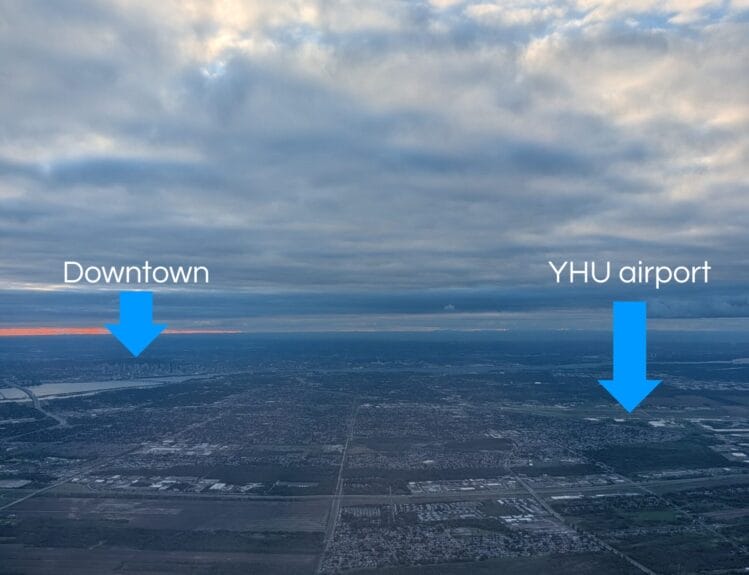
Another advantage only applies to certain travelers: it’s not on the island of Montreal. In fact, their studies indicate that getting there is faster than getting to YUL for about half of the metropolitan area’s population, including most of downtown. But not if you live or are headed to the West Island, of course…
The main disadvantage of the Montreal-Metropolitan airport is that outdated and archaic federal regulations allow only domestic flights. Porter currently serves 11 Canadian airports, and Québec regional airline Pascan serves 5 other airports. For Montrealers, you still have indirect access to Porter’s international network via Toronto’s 2 airports.
Another disadvantage applies only to savvy travelers who know how easy it is to get free access get paid to access VIP airport lounges: there are none at YHU (there are 10 at YUL; don’t miss our detailed guide for each Canadian airport soon). Food and drinks can be expensive in airports when you don’t have lounge access…
What does the Montreal-Metropolitan airport look like?
Flytrippers will publish a complete guide to the Montreal-Metropolitan airport very soon, but I wanted to immediately share my first impressions. As an AvGeek, it was cool to get to discover a brand-new airport right here in Canada.
To give an idea of the size, here’s the terminal seen from the air. There are 9 boarding gates and a seating capacity of 900 passengers.
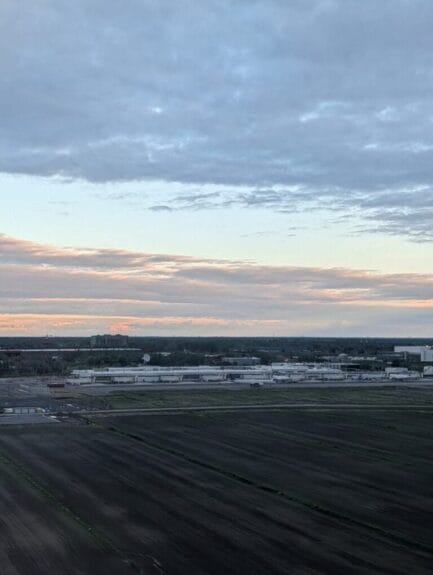
It’s therefore small enough to be much easier to navigate. Everything is on a single level and fairly compact.
(I’ll talk about getting to/from the airport in a section further down!)
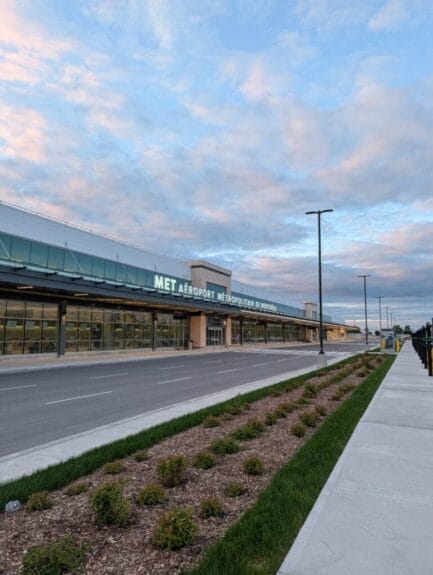
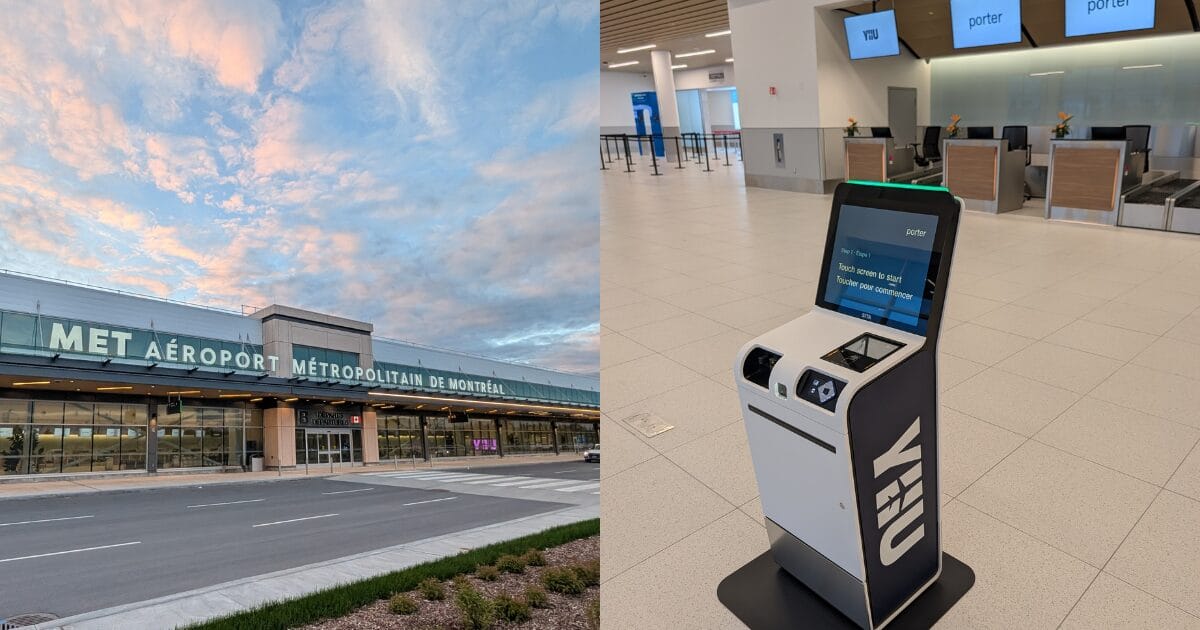
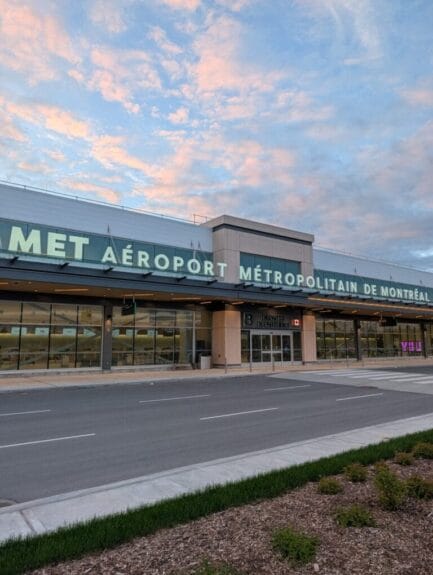
The facade design is very nice and modern.
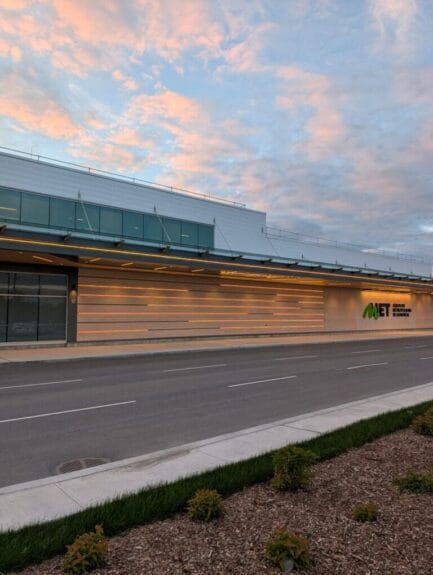
There are 3 entrances/exits (C, B, A; from right to left):
- The check-in counters are on the right (C)
- Security screening is toward the middle (B)
- Arrivals are on the left (A)
The color choices are well done, even if that’s obviously very subjective.
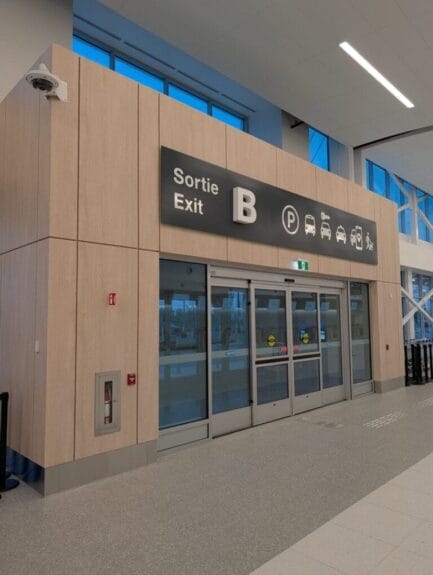
Inside, it’s shaped like a simple rectangle.
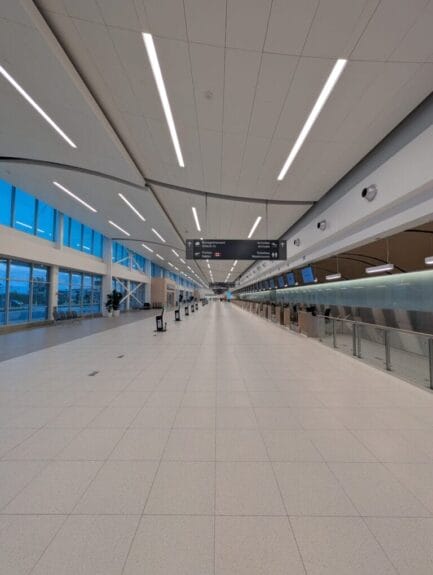
Obviously, the terminal is freshly built, so it’s beautiful. Very bright.
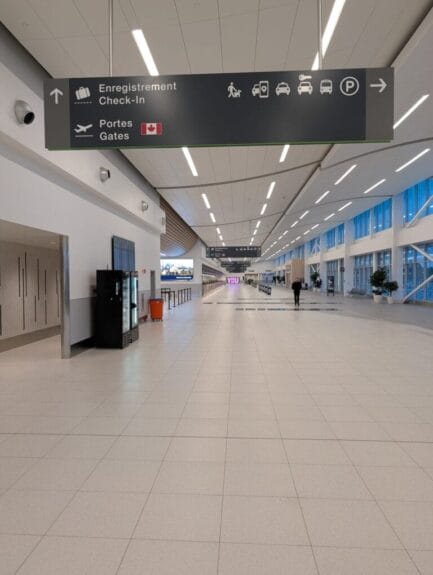
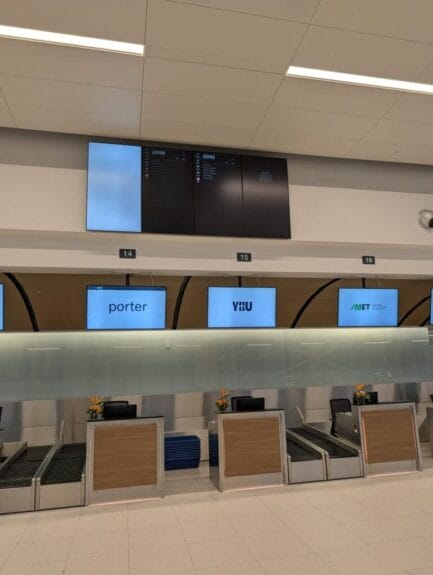
I’ll start on the right with the airline counters… but if you’re a savvy traveler who never brings checked bags, you can obviously go straight to security.
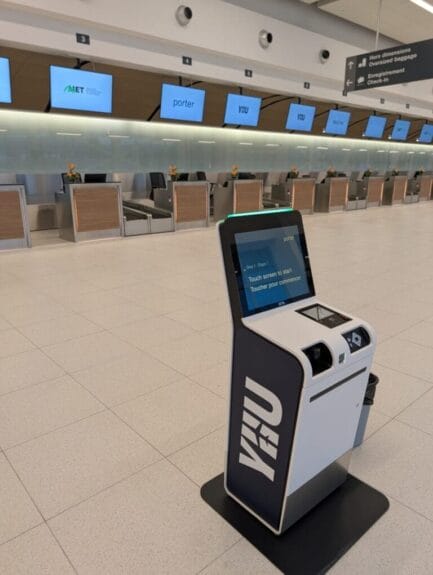
If you at least do your check-in online (it’s frankly inexplicable not to in 2026), you only need to drop off your bags.
I’ll repeat that the 1st checked bag is free for you and 8 travel companions on Porter with the BMO VIPorter World Elite Mastercard (just like on Air Canada with the main-level Aeroplan cards).
Since there are currently only 2 airlines, it’s not very hard to find the counters.
(Flights were done for the day when I arrived in the evening, so they were all closed!)
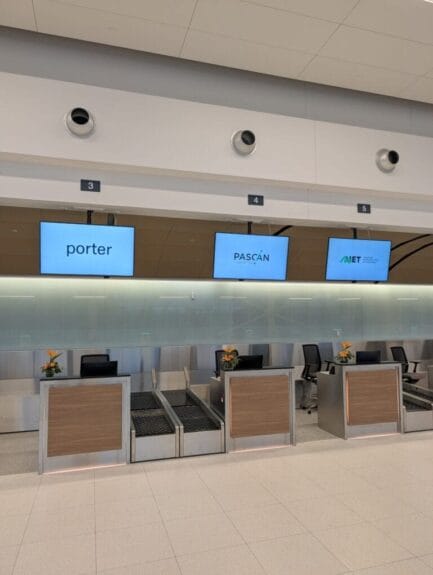
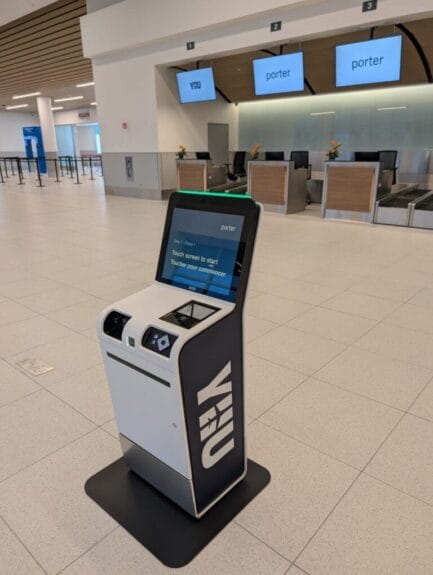
As you can see, there is also a row of self-service kiosks. There are also many counters.
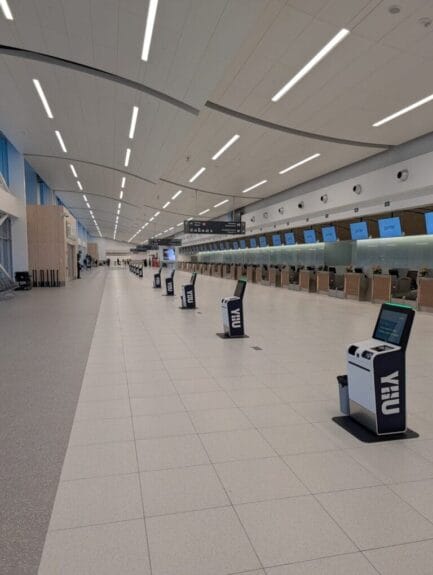
Clearly, the vast majority will be unused until more flights are added. It’s good that they built a bit bigger to start, so they won’t have to expand right away if things go well.
The airport is targeting 1 million passengers in its 1st year (YUL has 22 million, for comparison), but 4 million ultimately. That’s certainly ambitious.
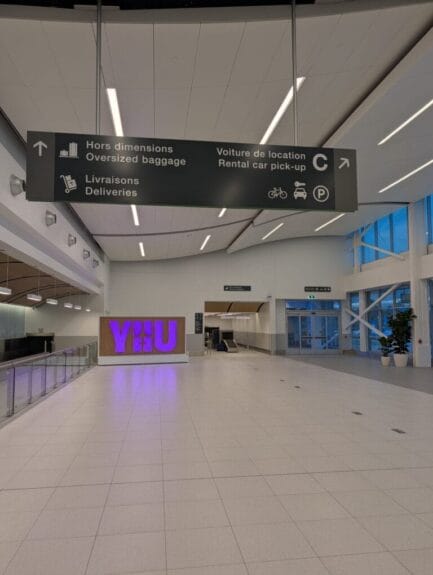
Anyway, to finish off this side of the terminal, at the end, there’s the oversized baggage drop-off and a big YHU sign; I’ll come back to the airport’s somewhat confusing branding in a separate section further down if you’re interested.
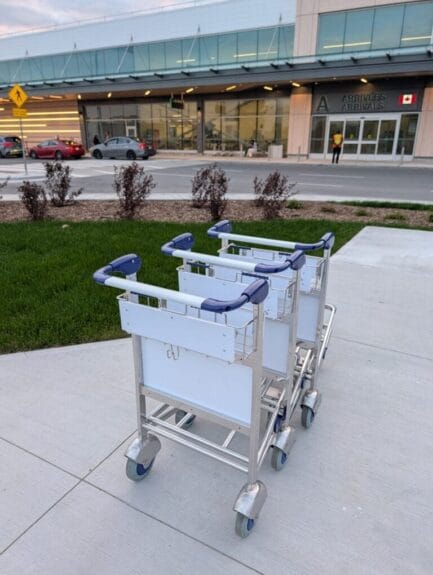
They have baggage carts, of course.
(Strangely, they don’t seem to have managed to sell advertising on them yet; it’s usually a very popular placement for brands. Reaching travelers, who tend to have a higher income, is worth a lot for brands… hence the many excellent welcome bonus deals on the best travel credit cards!)
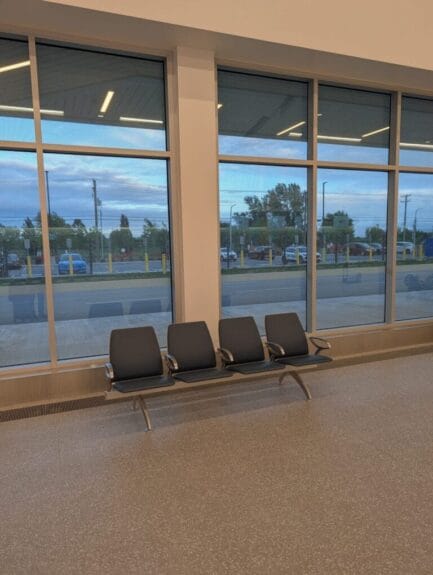
There are also a few seats along the windows in a few places, but not many (as is usually the case in the landside portion of airports).
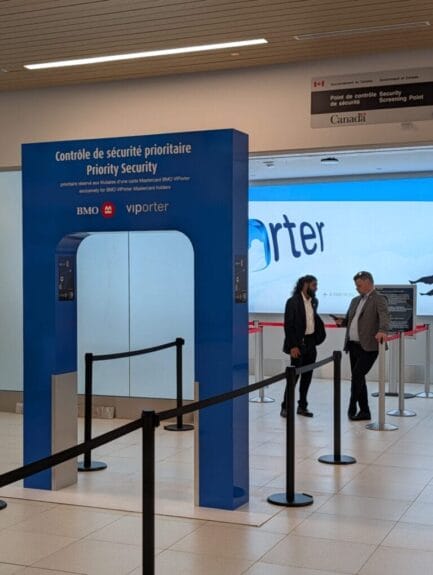
Then, just to the left of the counters, there’s the security checkpoint.
There’s a nice priority lane for holders of the BMO VIPorter World Elite Mastercard. Another great benefit!
That said, I can’t imagine the wait being very long even in the regular line. The security checkpoint is tiny because the airport is so small.
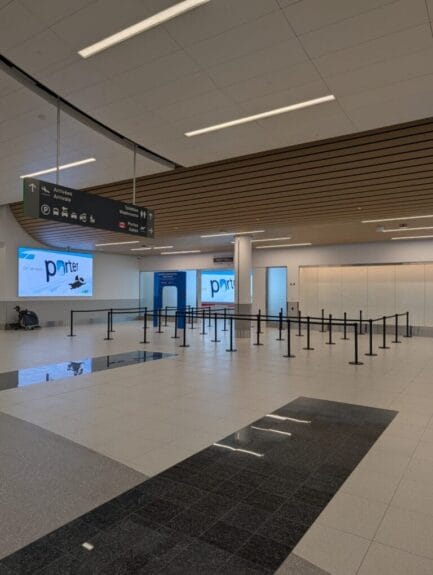
That explains why there also doesn’t seem to be a lane for Verified Travellers (NEXUS). That’s still a shame, because in addition to the shorter (or virtually nonexistent most of the time) line, the security screening itself is faster as a NEXUS member. We get used to that.
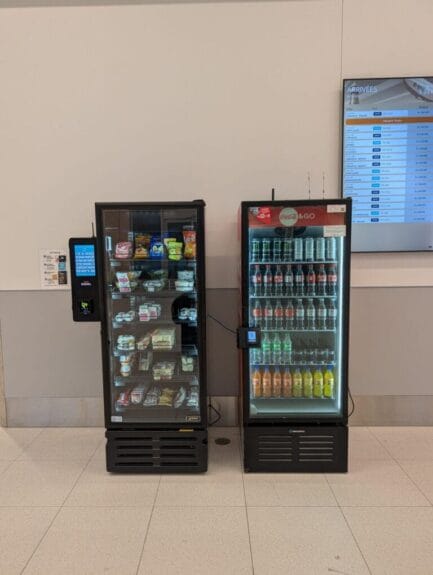
Next to the security checkpoint, there are flight information screens and vending machines.
There are very clean and modern restrooms right next to it.
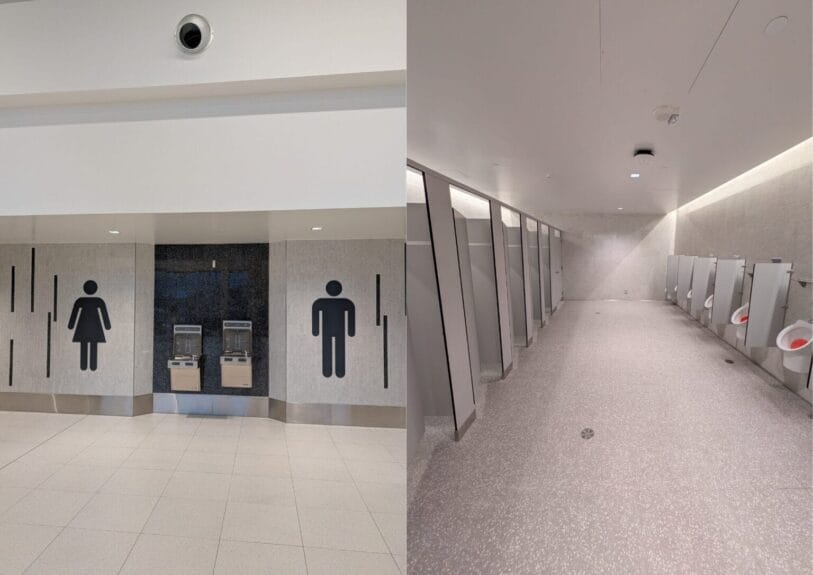
And finally, there’s the arrivals area at the end, on the left (I’ll come back to my arrival experience from yesterday below).
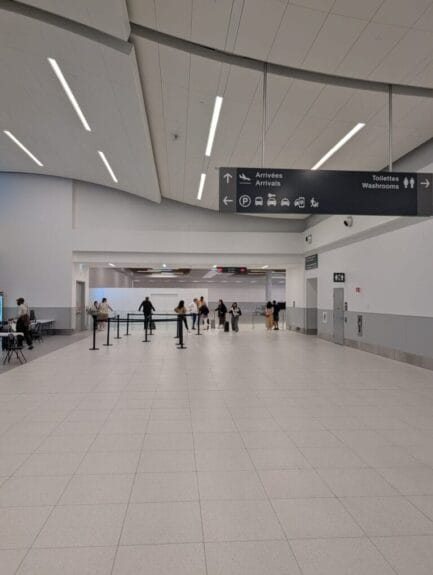
The most important part of an airport experience is obviously the departure (going through security and waiting), not necessarily the arrival.
I’ll definitely go back eventually to share the full experience, but all I could do yesterday was land there (I was in Washington this weekend; I’ll specify that I was at the Vans Warped Tour music festival, and not at a certain Trump UFC thing).
So, as for the airside part of the airport, I was hoping that when deplaning, we would arrive directly into the terminal, like in many airports (for domestic flights, obviously), so I could take plenty of photos for you.
That’s not the case.
So here’s an official photo of the waiting area, which is very modern and much more upscale than a typical airport; the only one in this article that isn’t one of my own photos taken yesterday.
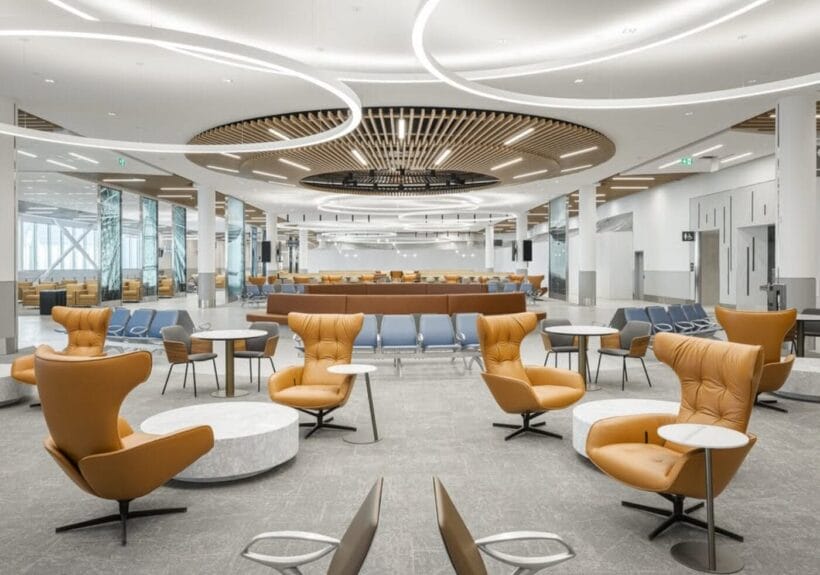
There is currently no food offering, but a Baton Rouge restaurant and a Café Dépôt coffee shop will open “soon” (as will a small convenience store).
What is it like to land at the Montreal-Metropolitan airport?
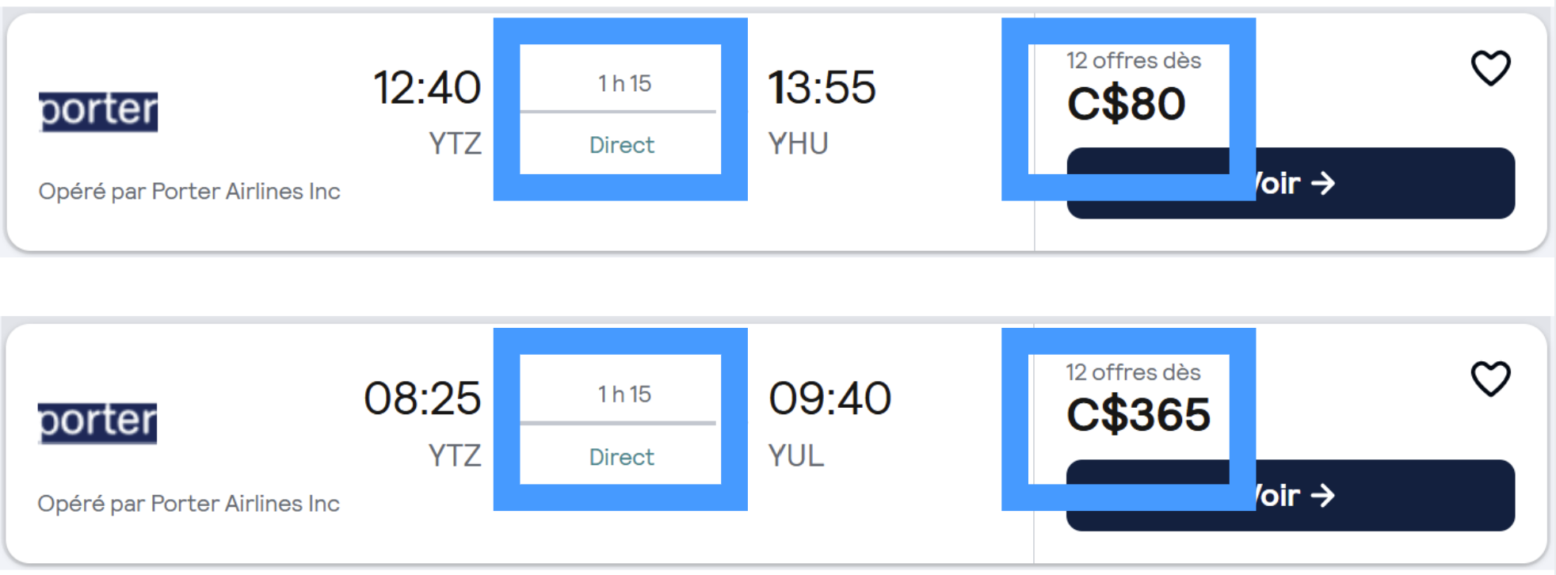
As for the approach to the Montreal-Metropolitan airport, the flight is not any longer. My flight from Toronto was blocked at 1h15; exactly the same duration as the flight to YUL.
(Also note the prices, for the exact same date! That’s why you always have to compare if you want to save on plane tickets. Not really more complicated than that; compare, compare, and compare some more!)
The main runway is oriented similarly to those at YUL.
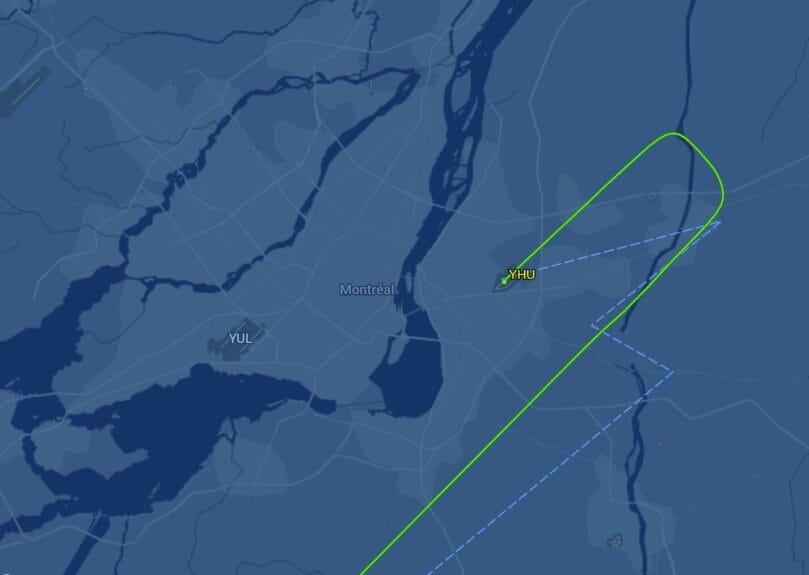
We went all the way past the suburb of Belœil, then made 2 left turns to arrive from the northeast, very similar to the flight paths at YUL.
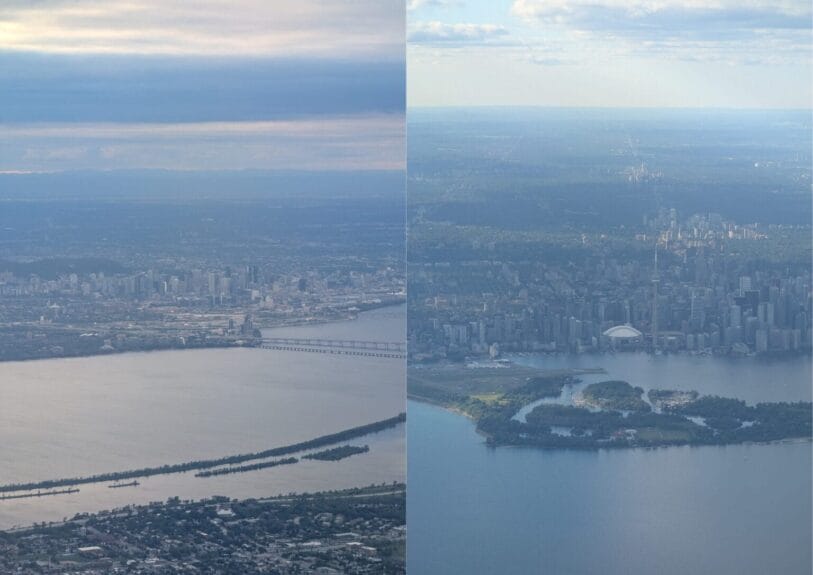
You could clearly see the downtown skyline on the left, at least from my great spot in seat 1A on the correct side (just as good for seeing Toronto on departure too).
The landing was smooth; if it was the pilot’s first time visiting YHU, it didn’t show.
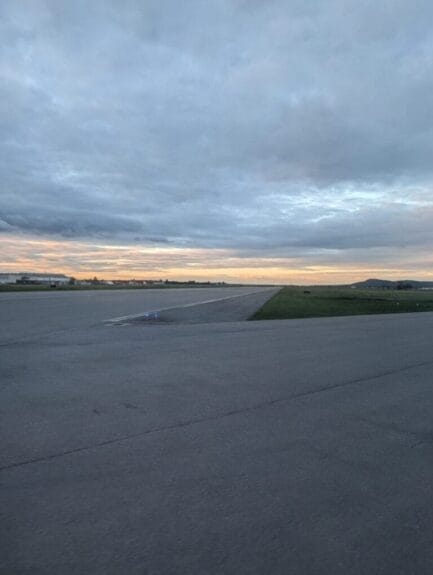
Once on the ground, taxiing lasted a grand total of 2 minutes. Another example of the advantages of this small airport.
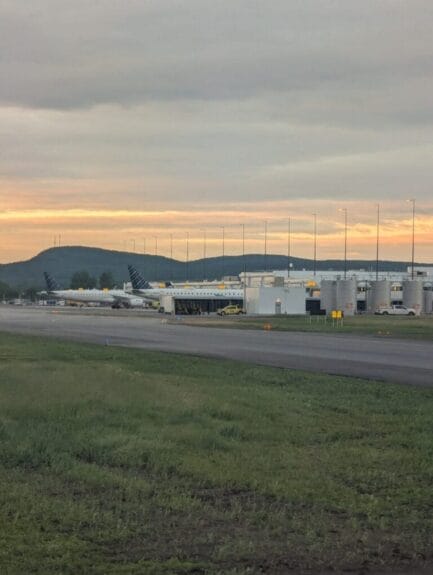
We parked at gate G4, next to a nice Porter jet.
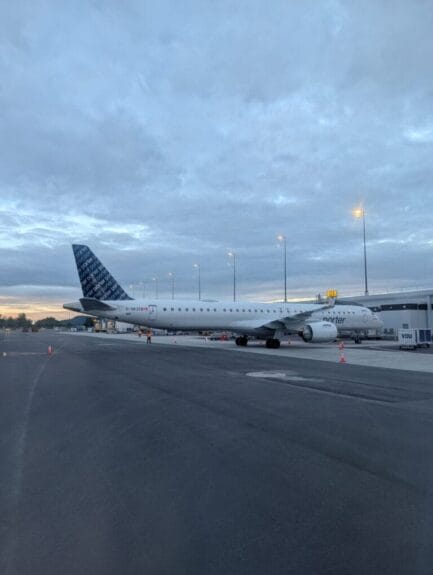
Deplaning is done via jetbridges and not by stairs on the ground like in many smaller airports.
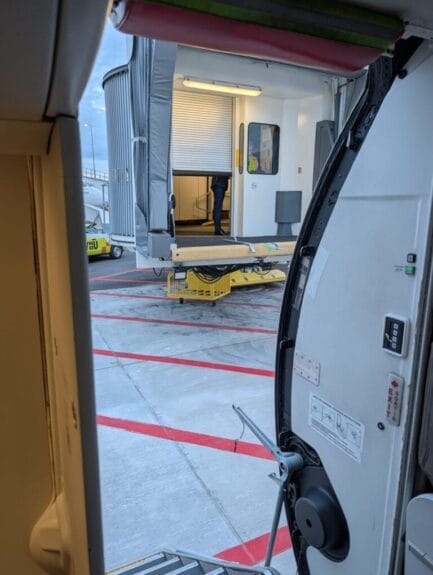
It took a little longer to line it up properly, but nothing dramatic; I’m certainly understanding when it’s literally the airport’s first day of operation.
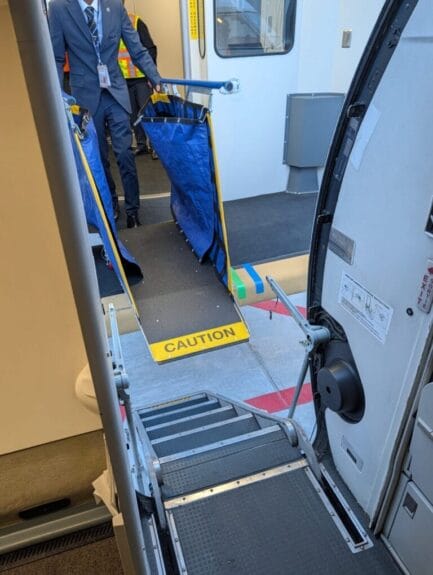
The jetbridge literally still smelled brand-new.
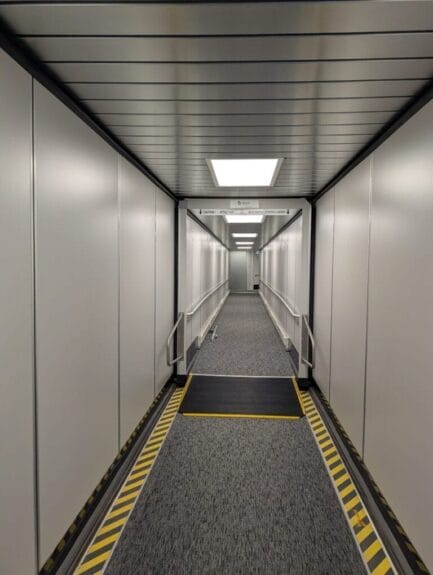
You arrive in a corridor that is separate from the main terminal area, as mentioned.
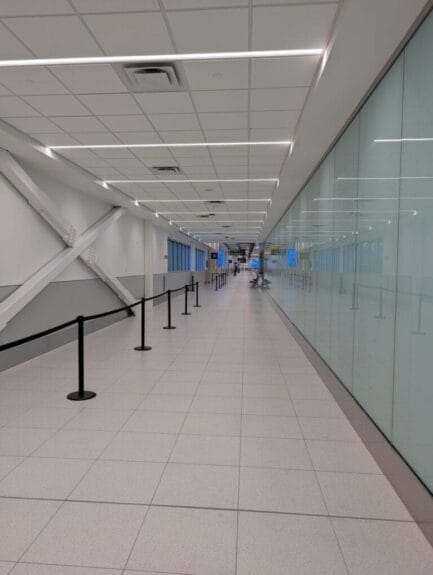
It leads into a large room with 2 baggage carousels.
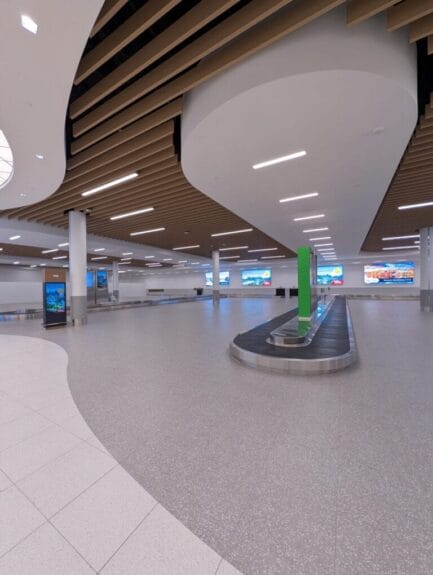
There was a Coca-Cola beverage vending machine and a few seats.
(And an advertisment for the BMO VIPorter World Elite Mastercard; it’s obviously a great spot to target travelers who love bringing bags!)
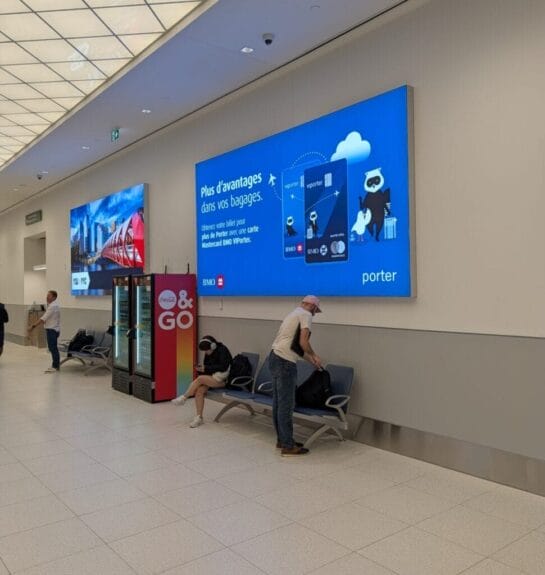
And the exit is just a few steps away. It’s certainly less walking than at YUL!
How to get to the Montreal-Metropolitan airport?
The Montreal-Metropolitan airport is on the South Shore, in the city of Longueuil (Saint-Hubert borough). It’s not that far from Downtown, but it’s not close like Porter’s YTZ airport.
Public transit is almost always the best option to save money between airports and cities.
Speaking of which, tell us whether you prefer savings or simplicity by filling out our survey and get 10 chances to win our giveaway for $999 in free flights to celebrate our 9 years of helping you travel for less.
That’s what I tested last night: the METbus operated by the RTL (Réseau de transport de Longueuil). It costs $3.75 (but the driver let us all in for free yesterday, to celebrate the airport’s opening I imagine).
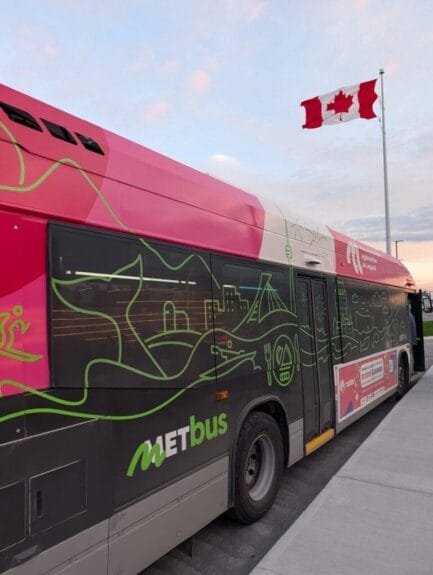
The stop is across from the taxi line, facing the arrivals section at the end of the terminal.
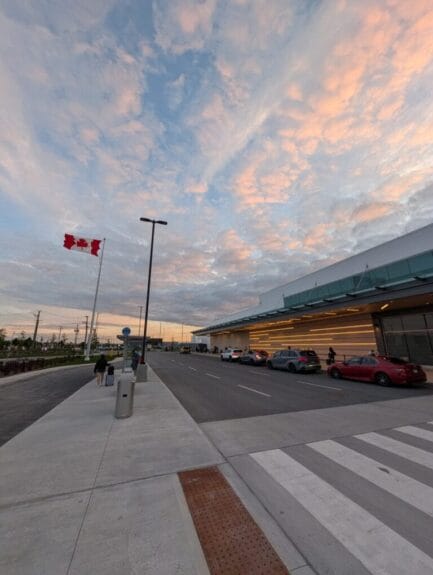
It takes you relatively directly to the Longueuil metro station (yellow line) in 26 minutes. From there, the metro takes 6 minutes to get to the Berri-UQÀM station in the middle of Downtown Montreal. So it’s not as direct as YUL’s 747 bus, but it could be a lot worse.
By comparison, Lyft was charging $22 (regular price) and Uber $25 at the time I thought to check, once I arrived downtown. Not too bad. But it’s not that much faster, either.
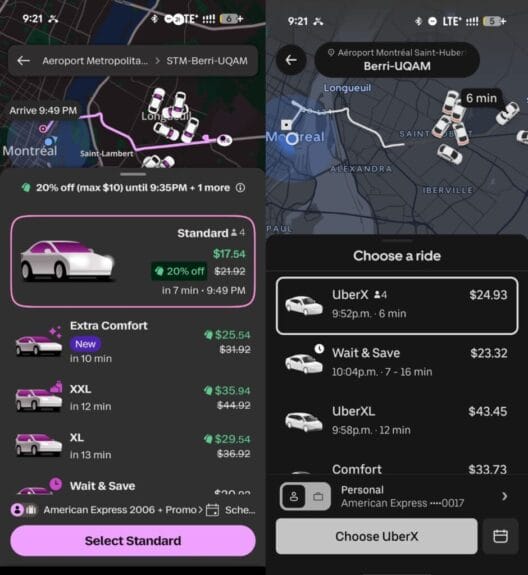
The downside is that the bus isn’t very frequent; that’s understandable given that the airport is new and far from being heavily used. Hopefully, that will improve.
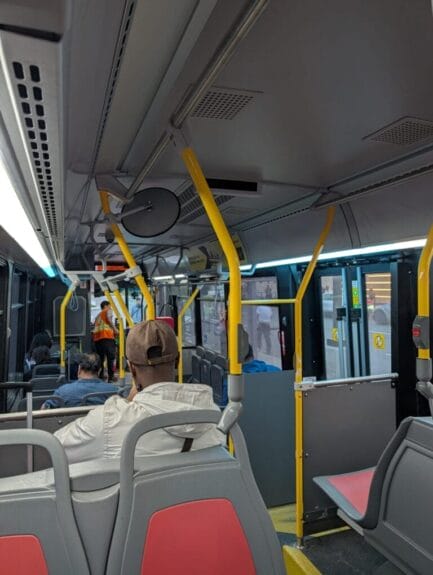
It’s a regular bus with no luggage rack, unlike the 747 bus for YUL. But it wasn’t full enough for that to be an issue on the 1st night. It might become one when it gets busier.
If you are from Montreal, you’ll probably go by car, even though airport parking is one of the biggest rip-offs in the world, along with airport taxis/Ubers.
The Montreal-Metropolitan airport doesn’t necessarily let you save on that (unlike Montréal’s American airport in Plattsburgh, which has always stood out for its very affordable parking but offers very few routes).
The economy price is $24 per day. There are more expensive parking spots just steps from the door, with also EV charging stations.
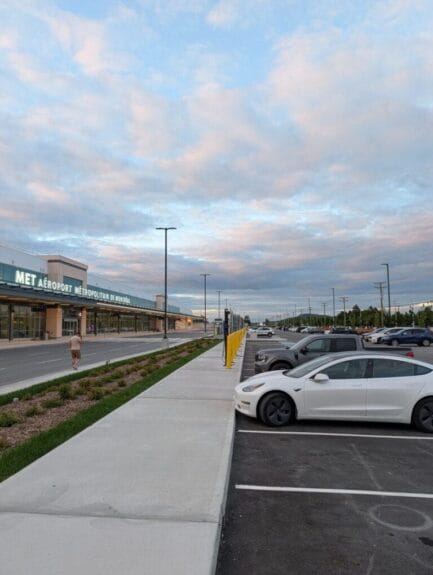
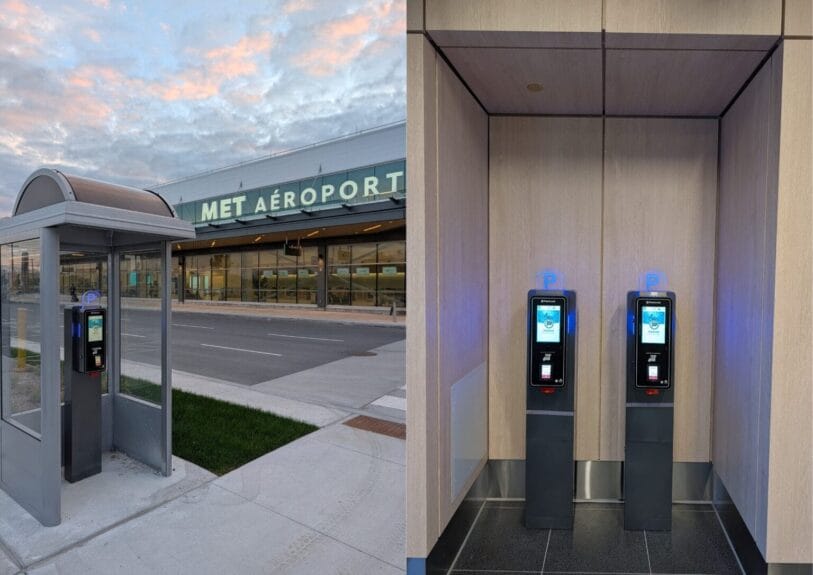
There were payment kiosks outside and inside the terminal.
What to call the airport (MET or YHU)?
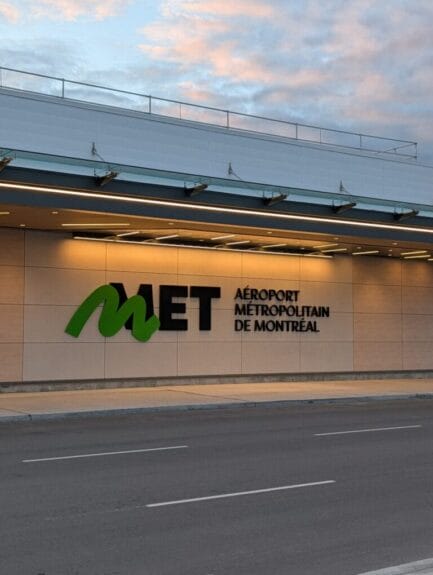
The airport has developed a nice branding with the “Metropolitan” name, and that’s what’s prominently displayed on the terminal facade.
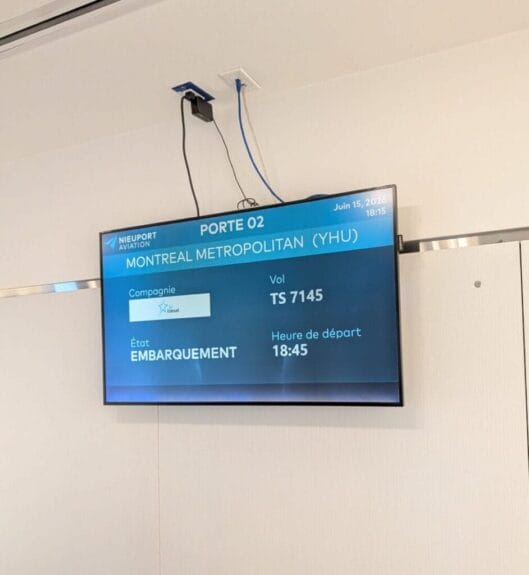
That’s also what was shown on the flight information screens and on the gate screen in Toronto.
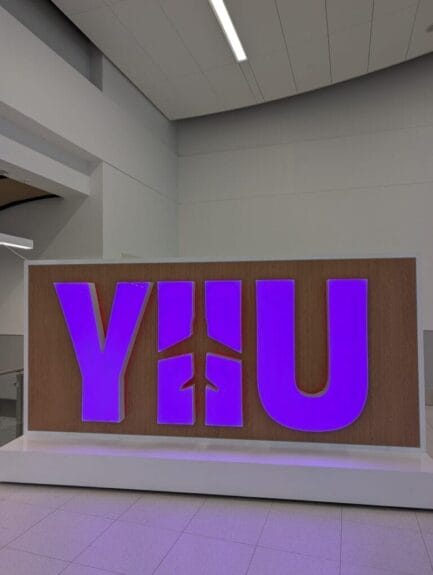
But they also keep the YHU branding in parallel, which can be confusing for some. It’s the airport’s 3-letter IATA code, and it’s harder to change (although the West Palm Beach airport will change its PBI code to DJT when changing its name to the Donald J. Trump International Airport this summer).
There’s a large illuminated YHU sign at the end of the terminal (impossible to miss from anywhere inside). I would’ve expected a MET sign instead; I thought they would focus on that.
The screens display both YHU and MET side by side (the counter screens; the ones above with technical issues were being calibrated by an employee).
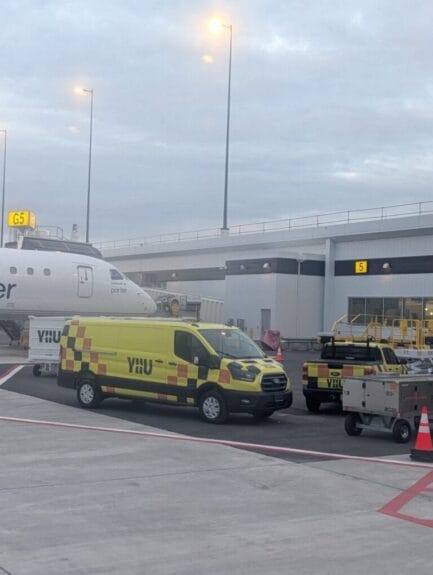
The vehicles have the YHU branding and not MET.
The kiosks too.
And to add yet another term, in all of his announcements, the Porter pilot only referred to the airport as “Saint-Hubert” and not “Montreal-Metropolitan” (and not “Montreal-Saint-Hubert” either, to be clear, just “Saint-Hubert”).
I can’t even imagine how all the non-Québec travelers on board had absolutely no idea what Saint-Hubert was, given that everywhere else it’s written either Montreal-Metropolitan or YHU… no Saint-Hubert anywhere.
Especially if they had heard of the typically-Québécois tradition that is St-Hubert rotisserie chicken!
What was the Porter experience to the Montreal-Metropolitan airport like?
Obviously, if you go through the Montreal-Metropolitan airport, you’ll likely be flying Porter, so it’s worth mentioning that part of the experience. To mark the opening of this new airport, I’ll talk about it more separately in a complete guide soon.
But I wanted to give you a teaser.
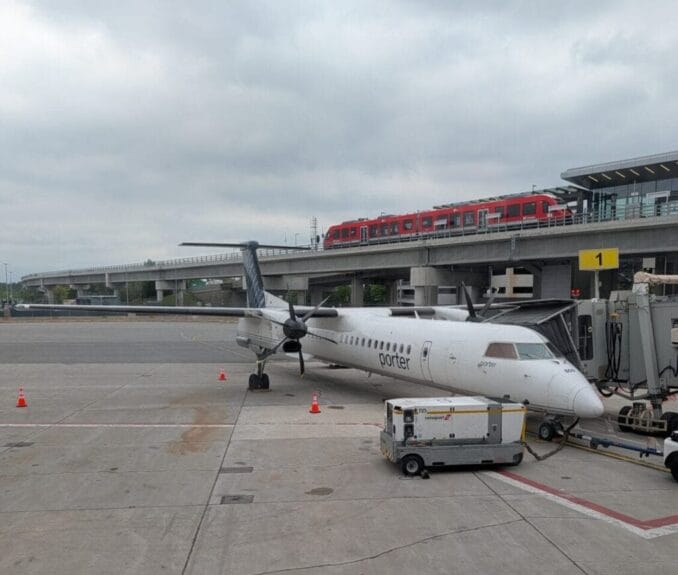
I really enjoyed my 8 lifetime flights on Porter. They are growing fast, and that’s great for competition in Canada.
I plan to travel more often with them thanks to the many points, the 2-for-1 companion ticket, and the travel benefits I get with my BMO VIPorter World Elite Mastercard.
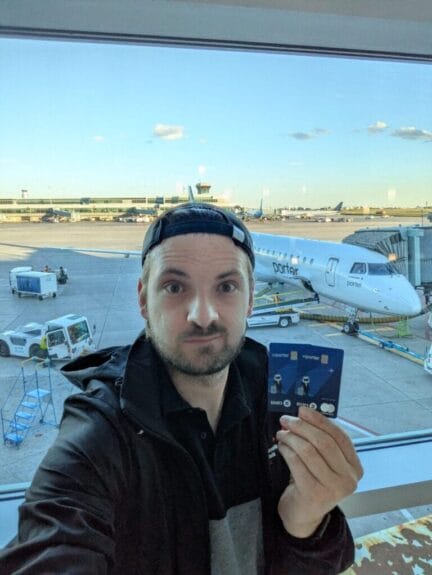
So, even though the welcome bonus gave me enough points for up to 8 roundtrip flights on Porter (!!!), I didn’t redeem them this time because Porter invited me on board to experience the new airport specifically.
As always, that gives them no editorial oversight over our content, obviously.
That said, my 2 Porter flights yesterday went very smoothly again. Everything was on time, and the service on board was very friendly.
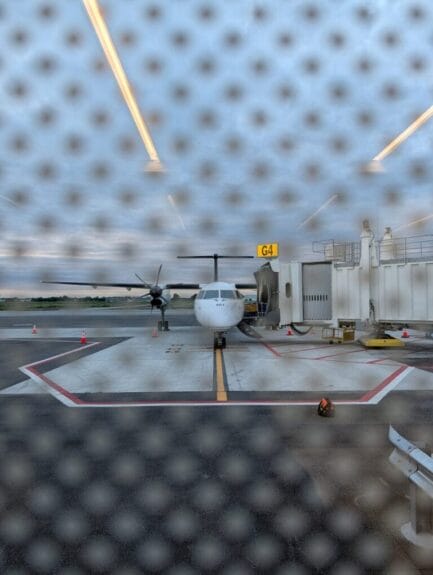
Porter is no longer just the small regional airline you may have known. It now has a fleet of 82 planes.
They have 2 types of aircraft:
- Their extremely modern new jets (Embraer 195-E2)
- Their longtime turboprop planes (De Havilland Dash 8-400)
The majority of destinations at YHU are served by the new jets, the main exception being the Toronto-City airport (YTZ), where jets are banned (for now, at least).
That’s where I was arriving from yesterday. But I also tried their jets last year, and it’s even better, obviously.
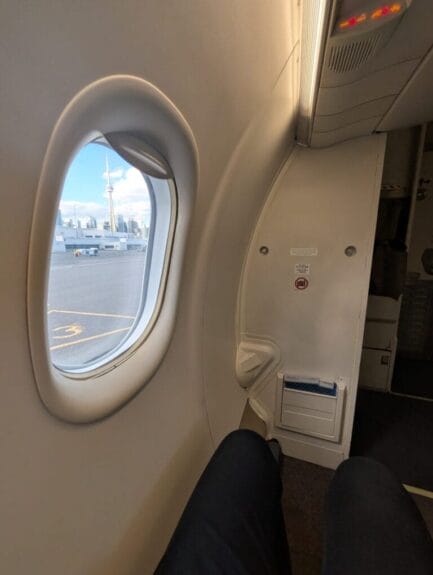
A big advantage of Porter is that none of its planes have middle seats (the configuration is always 2-2).
They pride themselves on offering a more elevated economy class experience, with free beer and wine served in real glassware, for example.

Their route network is obviously still fairly limited, but for travel within North America, Porter offers more and more choices, and it’s truly a pleasant airline to fly.
Learning how to travel for less
Join over 100,000 savvy Canadian travelers who already receive Flytrippers’ free newsletter so we can help you travel for less (and keep you updated on all things travel)!
Sign up for our free newsletter
Sign up for our newsletter
Summary
A more detailed review of the new Montreal-Metropolitan airport (YHU) will obviously come when I can depart from there; that’s the most important part of an airport experience. But I was at least able to land there yesterday on Porter, and I really enjoyed the experience on this opening day; the airport is efficient and beautiful, and accessible enough for those visiting Montreal.
What would you like to know about this Montreal-Metropolitan airport review? Tell us in the comments below.
See the flight deals we spot: Cheap flights
Discover free travel with rewards: Travel rewards
Explore awesome destinations: Travel inspiration
Learn pro tricks: Travel tips
Featured image: Montreal-Metropolitan airport (photo credit: Andrew D’Amours/Flytrippers)



Hello! The scanners are 2D, so larger electronic devices, such as laptops and CPAP machines, must be removed from your carry-on or backpack and placed in a separate bin. iPads do not need to be taken out. Water bottles can simply be emptied right before the screening.
I am connecting through this airport next week on to Toronto- should I be able just to walk to my next gate or do I have to go to arrivals?
Maybe it’ll be different for you; when I arrived, it was the very last flight of the day, so there were obviously no passengers connecting. So maybe you won’t have to go back through security. That said, even if you do, I doubt it’ll be very long 😉
You will only know when you depart from there, but are the security scanners the new ones that don’t oblige you to remove your electronic devices and liquids from your carry-on?
On one hand it would seem logical that they get the new scanners in a new airport, but on the other hand that is managed by the government so logic often just doesn’t apply :/