Senegal and the West Africa region certainly aren’t for all travelers, unlike the destination of the other surprising new transatlantic route from this airline that offers many unique routes. But if you happen to want to become a pro, get off the beaten path, and experience something truly different… it’s a country I really enjoyed, and it’s now accessible on a direct flight from Canada!
However, being a pro absolutely requires being able to do without a direct flight; many people always tell us they want to be a travel pro, so I can unequivocally confirm that no travel pro can be among those who are incapable of having connections, obviously.
But this new Canada–Senegal direct flight can still be very useful because flights to this region are quite expensive with cash or with rewards of the more simple type, even with connections! That’s the case for 4 of the 5 different regions of Africa, sadly.
Here are the details of the new Canada–Senegal route, with a bit more detail about the country than in my last new route post (because I feel bad for not having shared content about my trip to this very cool country).
What is the new Canada–Senegal route?
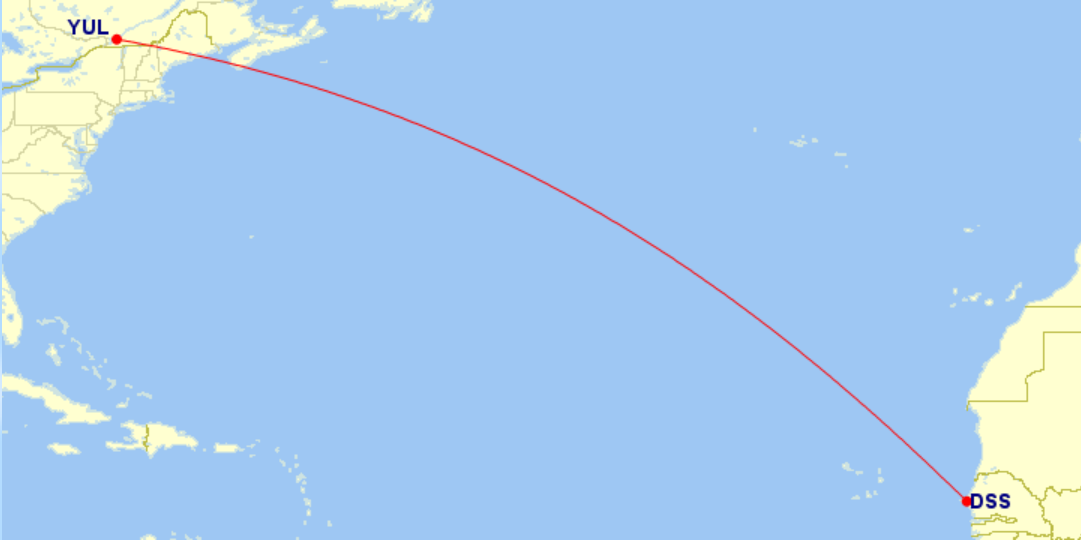
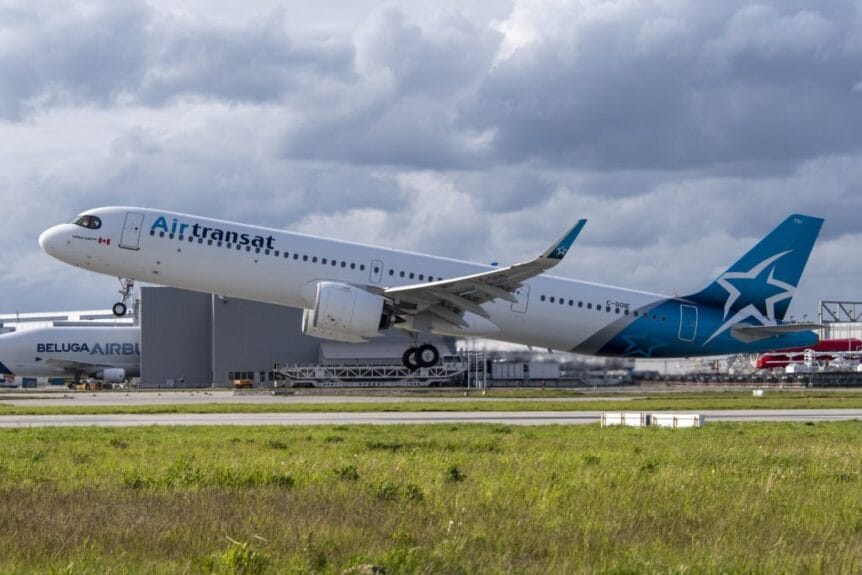
The new Canada–Senegal air route is between Montreal (YUL) and Dakar (DSS) on Air Transat. The airline announced this very first route between the French-speaking country that offers a true culture shock and all of Canada.
Here’s the essential info about the new Canada–Senegal route:
- Offered by Canadian airline Air Transat
- Leisure airline
- Between Montreal (YUL) and Dakar (DSS)
- Montreal is Air Transat’s largest hub
- Dakar is the capital and metropolis of Senegal
- Accessible from several other cities in Canada
- Including from Toronto
- With a Porter or Transat connecting flight
- Only route between Montreal and West Africa
- And even all of sub-Saharan Africa
- Sometimes not much more expensive than with a connection
- Sub-Saharan Africa is often very expensive with cash
- Around 1150 CAD roundtrip
- Or 115,000 points of the more simple type
- Possibly bookable with VIPorter points eventually
- Several Air Transat transatlantic routes are
- For as little as 50,000 points roundtrip (Montreal–Paris)
- Dakar isn’t available yet at the moment, but stay tuned
It’s excellent news to see new regions available on direct flights, because it forces other airlines to lower the prices of their connecting flights to that destination (the basics are to understand that flight prices are only dictated by competition, not by distance).
West Africa is relatively close (the flight is shorter than the other new one to one of our favorite European destinations) and yet it’s so rarely visited, sadly. And more broadly, it’s always good for consumers to have more options!
What are the details of the new Canada–Senegal route?
Here are the details of the new Canada–Senegal flights on Air Transat:
- New seasonal route
- Not year-round
- From June 17 to October 22
- Only 2x per week
- Wednesday/Saturday to Africa
- Thursday/Sunday to Canada
- Typical transatlantic schedule
- TS722 YUL-DSS (8h45): 7:40PM to 7:50AM (+1)
- TS723 DSS-YUL (10h15): 9:20AM to 2:05PM
- Distance of 6,275 kilometers (3,899 miles)
- About equivalent to Montreal–Milan
- Operated by an Airbus A321LR (narrowbody aircraft)
- 187 seats in economy class
- 12 seats in premium economy class (Club)
I’m going to repeat myself about the frequency and business class, if you read about Air Transat’s other new route. A flight that operates 2x per week is an extremely low frequency. But it’s certainly still better than no flight at all.
It’s nothing exciting for those who want to fly in luxurious business class lie-flat pod seats for cheap, as Air Transat simply does not offer that. But for economy, I flew Air Transat from Canada to Europe for 220 CAD in early October with one of Flytrippers’ flight deals, and it was perfectly fine (well, for the very low standards of any transatlantic economy experience).
Why visit Senegal?
I prefer to be honest, always (as you probably know if you follow us).
So in my opinion, if you’re like most travelers who have sadly never set foot outside of Europe or North America, it’s probably too big of a culture shock to choose Senegal (and West Africa) as your 1st destination that’s more off-the-beaten-path.
But if you already have a bit more experience as a traveler, it’s probably the best country to do your 1st trip to West Africa, an amazing and culture-shock-inducing region!
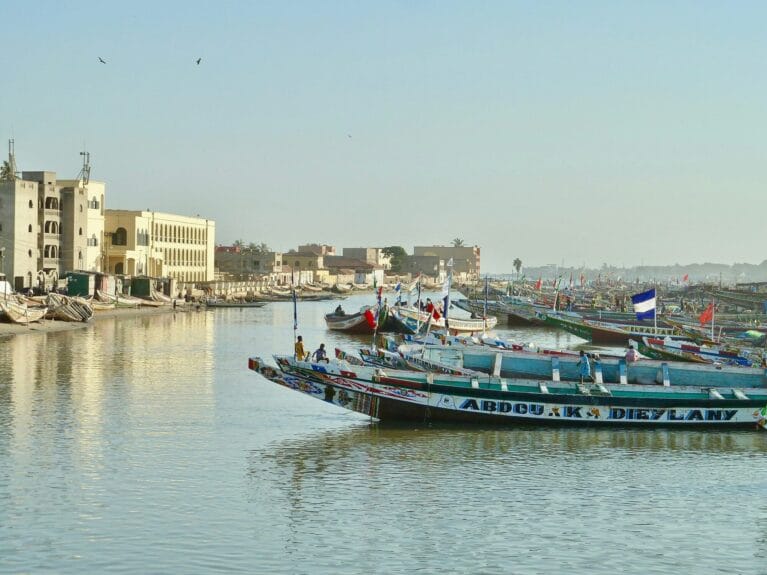
Senegal has a beautiful culture, a rich history, and a beautiful Atlantic coast. The country has quite a bit of variety, too. Like in most sub-Saharan African countries, everything except accommodation is extremely affordable.
In 2019, I was invited to mentor university entrepreneurship students from various countries for 10 days, so I extended the trip and spent 2 weeks in Senegal:
- Mainly in Saint-Louis
- The historic colonial capital on the coast in the north of the country
- A bit in Dakar
- The capital and metropolis on the coast in the middle of the country
- And even a bit in Ziguinchor
- A small town in the southern part of the country that’s almost entirely separate
It was a short trip because I also wanted to add time to visit neighboring Guinea-Bissau and Gambia as part of my quest to visit every country, but I really enjoyed Senegal.
This trip was my 1st in West Africa and even in sub-Saharan Africa (apart from 1 day in Ethiopia during an Aeroplan mini-Round-The-World), and it was an extreme culture shock even for me, who had already visited dozens of countries at that point (I reached my 50th during this trip, actually).
Evelyne, the Flytrippers team member who offers a perspective I can never offer (as a female traveler), also really enjoyed the country. The tip she gives is to wear a wedding ring to reduce (but not completely eliminate) marriage proposals from locals. That said, her visit was 15 years ago.
Of course, Senegal is a much less wealthy country than Canada. You shouldn’t expect it to look like Canada. But if you do want a culture shock, you’ll be very well served.
My trip to Senegal
As mentioned, I will share a bit more detail since I didn’t really write about that trip (sorry). The photos from this point on are mine (you can tell from the quality, it was before I got a good phone).
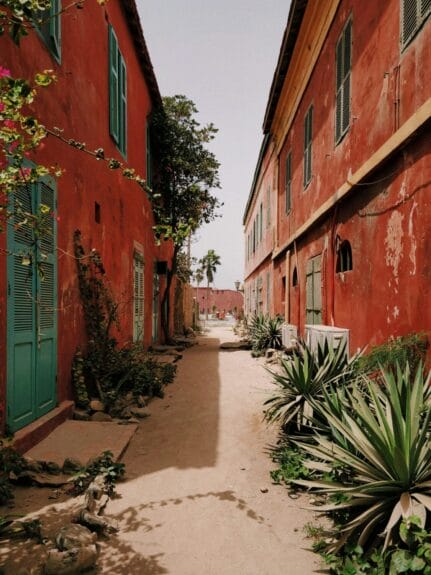
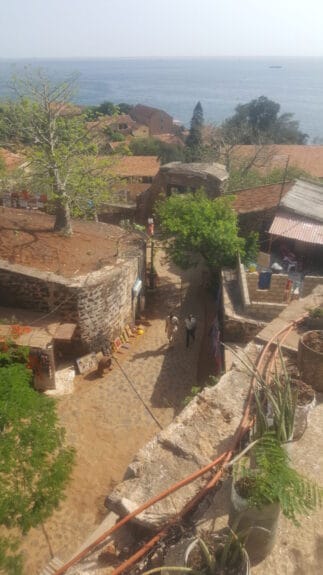
Gorée Island was one of my highlights, even though it’s very touristy. I recommend spending at least 1 night, as I did. It’s a basic tip for all very touristy places in the world, because my favorite part of the island was late in the evening and early in the morning, before and after the hordes of daytrippers.
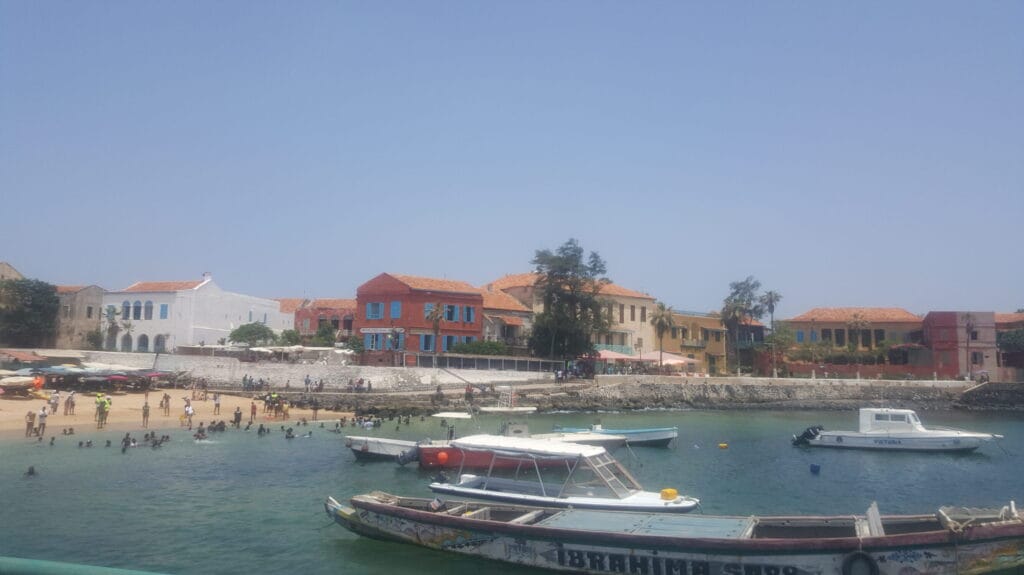
The history of this small island, from which slave ships departed, is moving. And the architecture on the island is very pretty, too. It’s one of Senegal’s 7 UNESCO World Heritage sites (and 1 of the first 12 in the world).
It’s off the coast of Dakar, a very lively metropolis where I would have really liked to spend more time, as a fan of big cities. The metropolitan area’s population is 4 million, about the same as Montreal (the country has 19 million inhabitants, about half of Canada).
The city is located on the Cape Verde Peninsula, the easternmost point of Africa (not to be confused with the Republic of Cape Verde, officially Cabo Verde, which is 600 km offshore and has a somewhat misleading name).
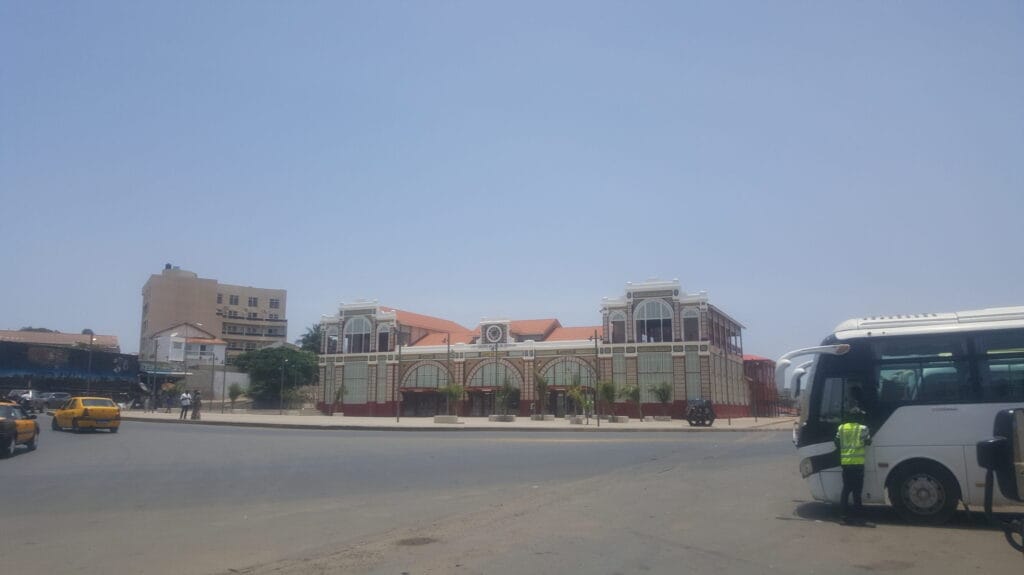
It’s probably one of the most accessible and most safe big cities in West Africa (I’ll come back to the safety aspect below, much to my dismay).
My highlights of the city were walking around the old town (near the ferry terminus) and eating a good meal on the oceanfront. I was also impressed by the tallest statue in Africa, which overlooks the ocean and the city since it’s located on 1 of the 2 Mamelles hills.
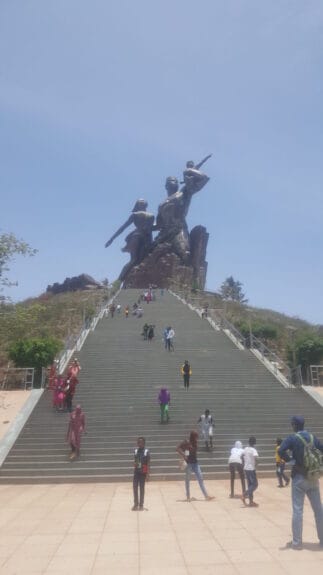
About a 5-hour drive to the north, there’s the old capital, near the mouth of the Senegal River (which makes up most of the border with Mauritania; it’s one of the times I’ve been closest to a new country without entering).
Saint-Louis may have less appeal for a more conventional traveler, but I loved it.
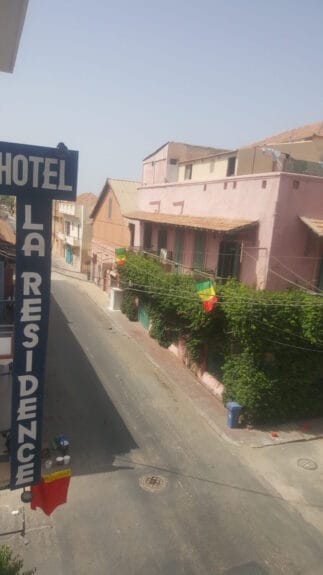
Especially the island where the colonial city was built, which is also a UNESCO site. The architecture, the markets, the coast, the food… it was really very cool.
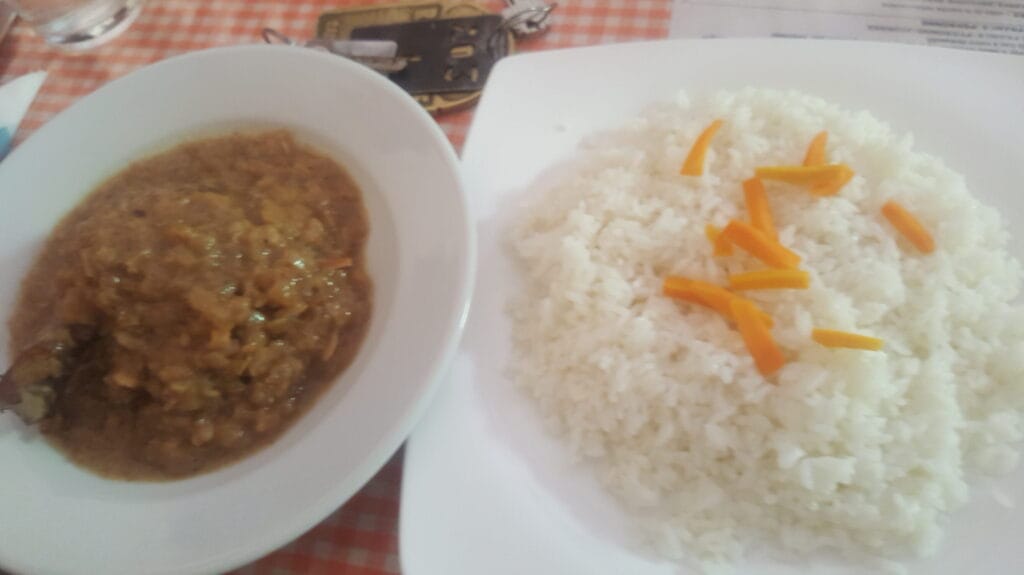
I obviously ate several Wolof rice dishes there, the country’s iconic dish that cost around $2, at least in 2019 (and that I could always pay for with my phone already in 2019; even West Africa has understood that cash is archaic).
Many people don’t know that Africa is 3 times larger than Canada (because they don’t know that maps greatly exaggerate Canada’s size) and think that the part of the continent south of the Sahara is homogeneous in terms of nature, but that’s completely false.
Several Senegalese people told me they find it ridiculous that tourists show up there expecting safaris like the well-known ones in East and Southern Africa. It’s normal when you just don’t know, but that’s why at Flytrippers we’re so passionate about educating and making travelers more knowledgeable.
In short, it’s not because it’s in Africa that it’s such a good place to go on safari. But the nature is still nice. I visited Langue de Barbarie National Park, which was a welcome change of scenery after a lot of urban time.
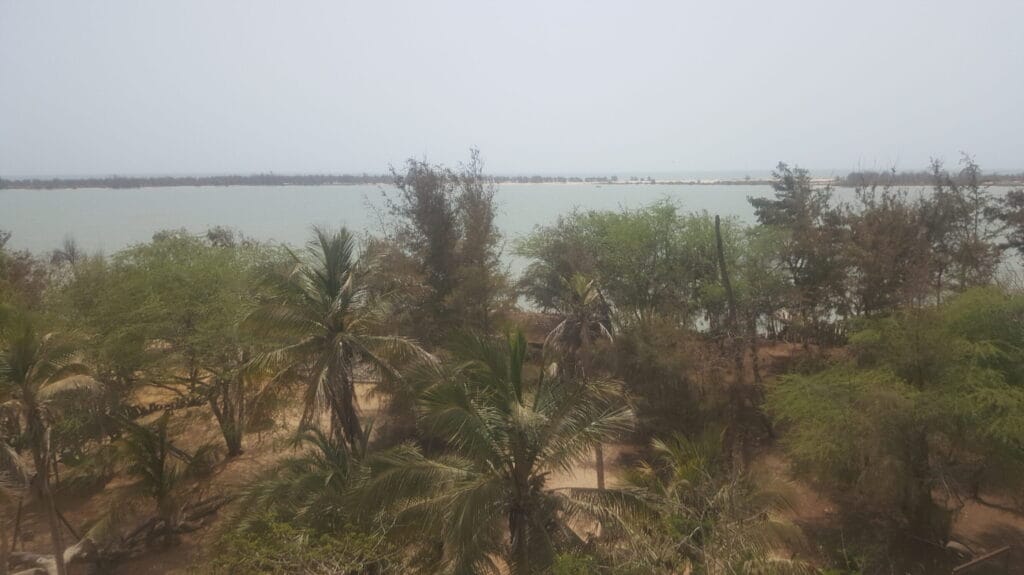
Finally, my other Senegalese destination was Ziguinchor, in the Casamance region.
It’s in the southern part that’s separated from the rest of the country by Gambia, the country with one of the strangest shapes in the world (the French gave the British 200 miles around the Gambia River, which makes it the smallest country in continental Africa).
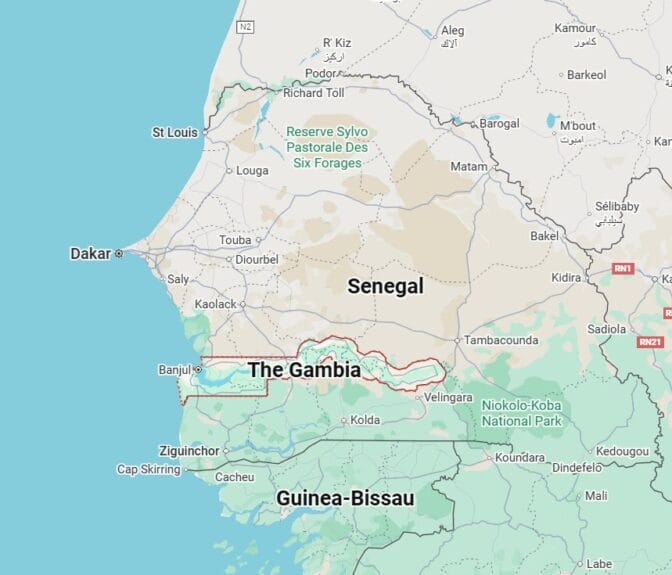
As you can see on Google Maps with the green/beige divide, the geography of this part of Senegal is quite different.
And especially, as always, it was also incredibly enriching to visit an absolutely non-touristy city. Another basic tip.
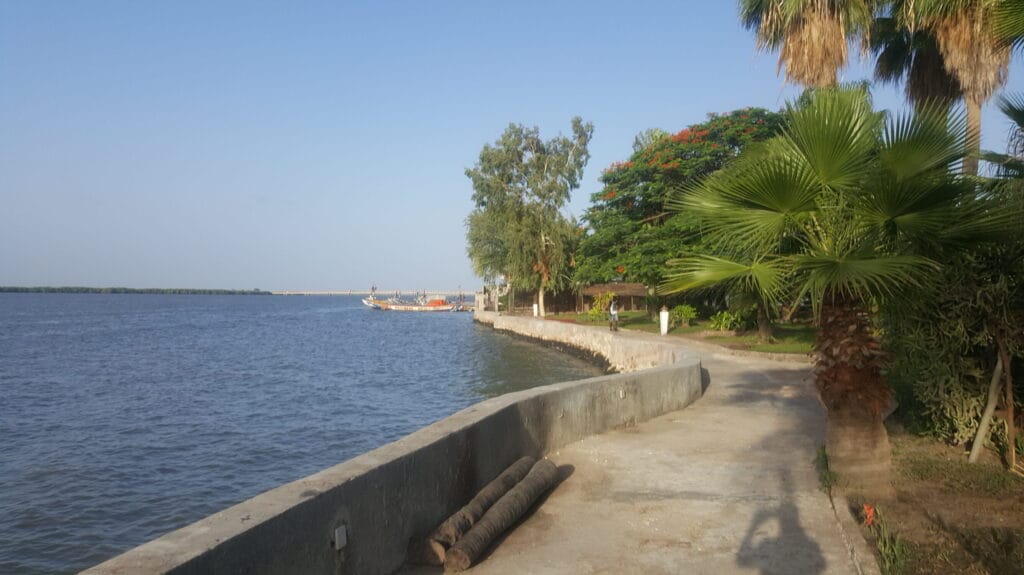
To get to Senegal, I booked the cheapest option to the country, which was Montreal–Casablanca–Dakar (for my dates). I used the self-transfer tip and booked a Dakar–Ziguinchor flight for 60000 XOF roundtrip (surprisingly cheap for Africa).
So Ziguinchor is where I first stepped outside in West Africa. If you don’t like being the center of attention, it’s probably not for you. But it was a very pleasant culture shock, like any 1st West African experience.
I spent very little time in Ziguinchor, but I was fortunate to watch the national soccer team play in the Africa Cup final live on a big screen on the street with many very enthusiastic Senegalese people (they were less so after their loss).

I even got to see the landscapes between Ziguinchor and the Guinea-Bissau border because that’s where I got to experience my 1st overlanding experience, a must in sub-Saharan Africa.
The engine of our sept-places (the name used in Senegal for the classic shared vans) overheated, and the driver had to stop to pour quite a bit of water on it. It was really a perfect experience, just like the customs officer’s attempt to extort a small bribe from me (which I surprisingly managed to avoid by refusing and being assertive).
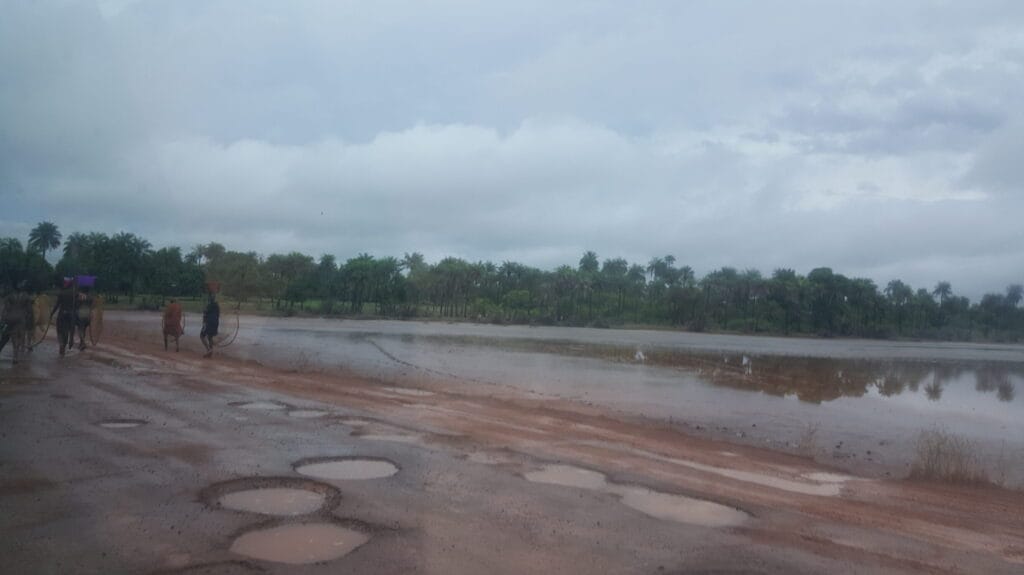
Obviously, you’re not obligated to choose such an authentic and intense experience.
But in any case, you’ll still experience culture shock in Senegal.
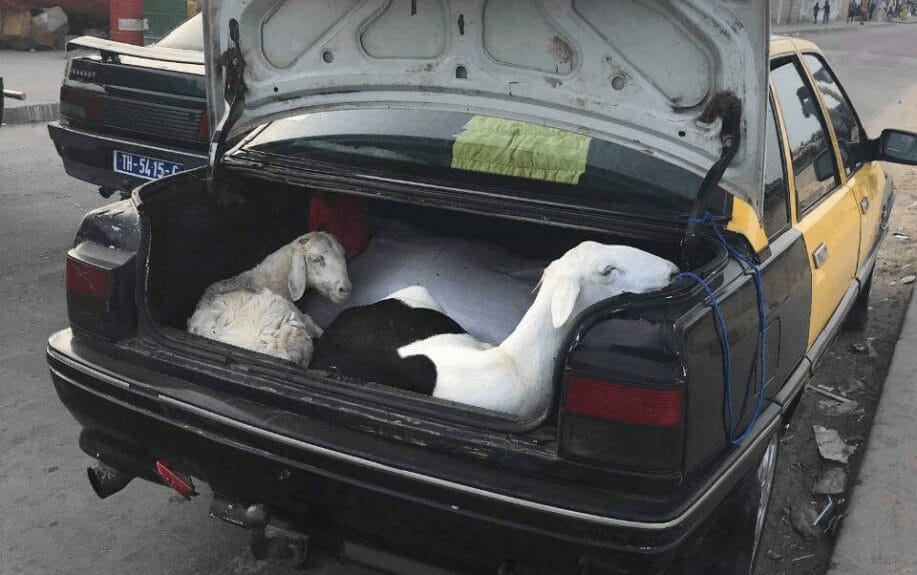
Especially if you go during the Tabaski festival (Eid al-Adha), as I did. It’s the feast of sacrifice, where 4 million sheep get sacrificed, so there were sheep everywhere (even in taxis). I had written a post about the Tabaski festival after my trip.
Or if you go during an election, like Evelyne who experienced some protest adventures there. I also experienced that in the neighboring country on this trip, actually; it was the 1st time since Guinea-Bissau’s independence (from 1973 to 2019) that a president completed his term without a coup or being assassinated. Pretty crazy.
Political instability is obviously part of the reality in much of sub-Saharan Africa, and that certainly contributes to creating the perception of insecurity that many people wrongly hold.
I hate talking about the security aspect because even simply talking about it encourages people who are afraid of everything and contributes to normalizing being afraid of everything.
Fear is obviously a normal reflex when faced with anything unknown; it’s a normal emotional reaction to a lack of knowledge. What’s not normal is remaining without knowledge, considering how easy it is to access information in 2025.
It’s incredible that it’s necessary to say this, but it’s not because a country is poor that it’s dangerous. In fact, once again, it’s very normal as an impulsive reflex, but when you’ve traveled more, I guarantee you’ll also find it incredible.
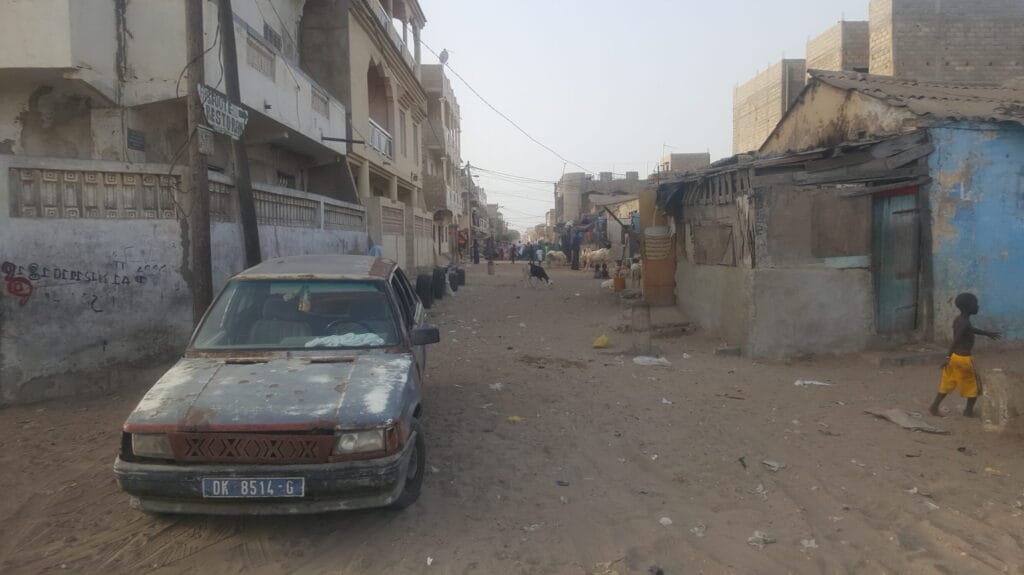
I would add that being afraid of everything is really not a quality; like any skill, you should want to develop your ability to be rational and not fearful (and to find information about the reality of a country). I’m passionate about personal development, so I want to help you improve (being a traveler happens to be one of the best ways to become a better person).
Senegal is quite safe; there’s no need to worry about that at all.
If you’re among those who give credibility to the federal government’s travel advisories, you should really stop (one of the basic non-negotiable criteria for being a pro traveler is definitely knowing that these advisories are alarmist and that you need to take them with a huge grain of salt). But for what it’s worth, Senegal has the same security rating level as France in Canada’s advisories!
As for political instability, the brief minor concern of 2024 was rather exceptional: Senegal is considered one of the most stable countries on the continent. It lasted a few days. It was in 2024. You can get over it now! 🙂
I’m objectively among the least fearful people in the world, but I would, however, recommend avoiding long car rides in the dark.
I did the route between Dakar and Saint-Louis in the evening with a taxi driver (I was with 3 other people for this portion of the trip, so it was cheaper). It’s one of the few times in my life that I was afraid of dying.
But obviously, it depends a lot on which driver you get, like everywhere! In my case, the driving in the sept-places was really better, but it’s an infinitely small sample size.
Learning how to travel for less
Join over 100,000 savvy Canadian travelers who already receive Flytrippers’ free newsletter so we can help you travel for less (and keep you updated on all things travel)!
Sign up for our free newsletter
Sign up for our newsletter
Summary
Air Transat is launching a new Canada–Senegal route, and it’s actually the only air route between Montreal and all of Sub-Saharan Africa! West Africa is an African region that’s very exotic and perfect for more experienced travelers who want to get off the beaten path.
What would you like to know about this new Canada–Senegal route? Tell us in the comments below.
See the flight deals we spot: Cheap flights
Discover free travel with rewards: Travel rewards
Explore awesome destinations: Travel inspiration
Learn pro tricks: Travel tips
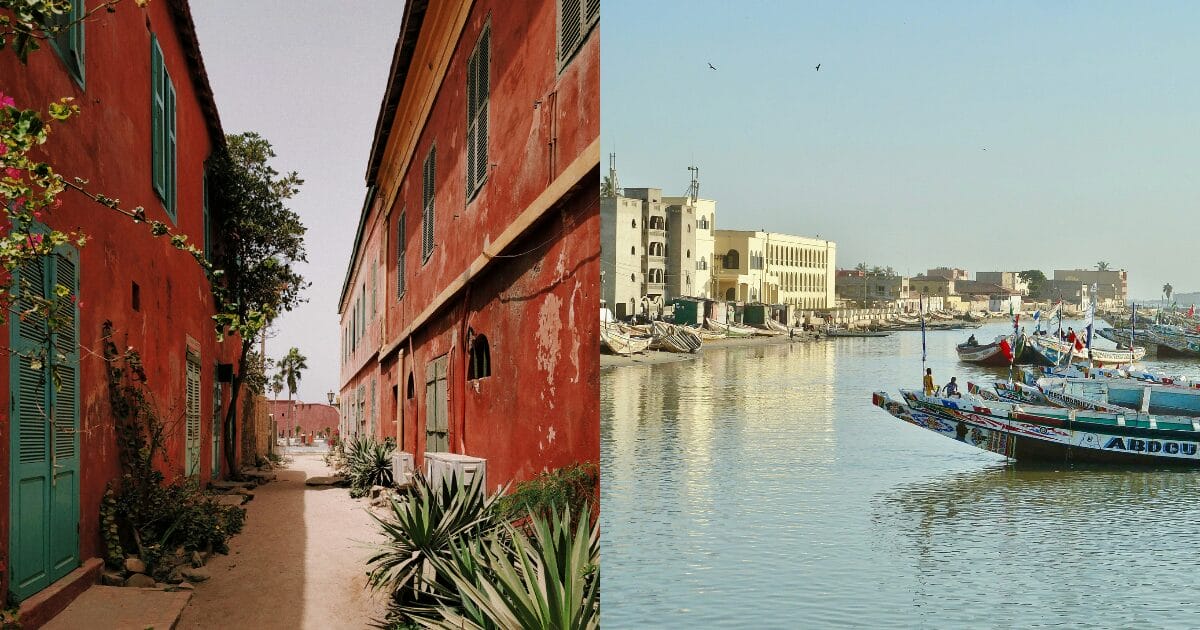
Featured image: Gorée and Saint-Louis, Senegal (photo credit: Anton Lecock & E. Diop, edited by Flytrippers)